

Best Cat Food For Sensitive Stomach
Sensitive stomach issues in cats can be frustrating for their guardians and miserable for the cats themselves. The proper diet can make a night‑and‑day difference—reducing vomiting, easing diarrhea, firming stools, and calming gas—without sacrificing flavor or nutrition.
Cats can be finicky eaters, and for some, a sensitive stomach can make mealtime a challenge. If your feline friend struggles with digestive issues, selecting the right cat food is crucial for their health and well-being.
This complete guide to the Best Cat Food for Sensitive Stomach explains what “sensitive stomach” really means, how to read labels, which ingredients to avoid, how to choose between wet and dry, and how leading brands compare. You’ll also get practical feeding schedules, transition tips, and troubleshooting checklists.
| Brand & Product Line | Type | Primary Protein | Digestive Features | Best For | Price Level | Format/Texture |
| Hill’s Prescription Diet i/d | Wet & Dry | Chicken (highly digestible) | Prebiotic fiber, electrolytes, controlled fat | Acute GI upsets, stool normalization | $$$ | Stew, pâté, kibble |
| Royal Canin Digest Sensitive | Wet | Pork/Chicken by-products (specified) | Highly digestible, moderate calories, gentle gravy | Cats prefer wet food with portion control | $$ | Thin slices in gravy |
| Purina Pro Plan Sensitive Skin & Stomach | Wet & Dry | Salmon/Turkey | Prebiotics, no artificial colors, omega-3s | Budget-friendly gut support | $$ | Kibble, pâté |
| Blue Buffalo Basics LID | Wet & Dry | Turkey or Salmon | Limited ingredients, no chicken in some recipes | Suspected chicken sensitivities | $$ | Kibble, pâté |
| Instinct Limited Ingredient Diet | Wet & Dry | Rabbit, Duck, Turkey | Grain-free LID, minimal additives | True elimination-style simplicity | $$$ | Kibble, loaf |
| Smalls (Fresh) | Fresh cooked | Turkey/Beef/Chicken | High moisture, human-grade, simple recipes | Picky eaters, hydration boost | $$$$ | Fresh, portioned |
| Open Farm Sensitive Stomach | Wet & Dry | Turkey/Whitefish | Prebiotics, traceable sourcing, no artificial colors | Transparent sourcing + gut support | $$$ | Kibble, stew |
| Royal Canin Veterinary Diet Hydrolyzed Protein | Wet & Dry | Hydrolyzed soy/chicken | Hydrolyzed peptides, very low reactivity | Food sensitivity / IBD | $$$$ | Kibble, loaf |
What Counts as a “Sensitive Stomach” in Cats?
“Sensitive stomach” isn’t a diagnosis; it’s a cluster of signs that often respond to dietary changes.
Common signs:
- Intermittent or frequent vomiting (especially after meals)
- Soft stools or diarrhea, sometimes with mucus
- Excessive gas, burping, or audible stomach noises
- Occasional constipation or alternating diarrhea/constipation
- Decreased appetite or picky eating
- Dull coat or weight loss from poor nutrient absorption
Rule out first: Persistent or severe symptoms, blood in stool, lethargy, weight loss, or abrupt behavioral changes warrant a vet visit. Parasites, pancreatitis, inflammatory bowel disease (IBD), hyperthyroidism, dental pain, and hairballs can mimic “sensitive stomach.” Diet helps, but medical causes need medical care.
How Nutrition Helps: Core Principles for Calming the Gut
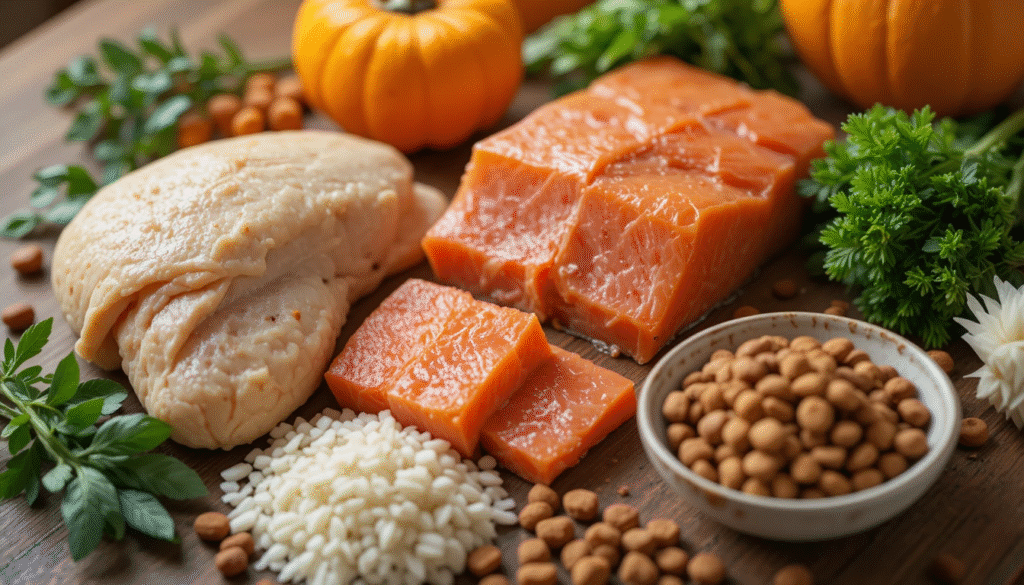
The digestive comfort of cats hinges on digestibility, ingredient simplicity, and gut-friendly extras.
1) Focus on high digestibility
Cats thrive on animal protein and moderate fat. Look for complete diets where primary protein comes from clearly named meats (e.g., turkey, rabbit, duck, chicken, salmon) and where meat by-products are specified (e.g., “chicken liver”) rather than vague. Highly digestible recipes reduce residue and GI workload.
2) Simplify with limited‑ingredients or novel proteins
Many sensitive cats do best on limited‑ingredient diets (LID) that use one protein and one main carbohydrate. Novel proteins (such as those from rabbit, duck, and venison) can be helpful when common proteins trigger adverse reactions. Keep add-ons minimal.
3) Consider hydrolyzed protein for suspected food reactions
Hydrolyzed diets break proteins into smaller fragments that are less likely to trigger immune responses. They’re often veterinary-exclusive but can be game‑changers for chronic issues.
4) Choose gentle carbohydrates and fibers
If carbs are used, prioritize rice, oats, pumpkin, or potato over high‑FODMAP fillers. Small amounts of soluble fiber (pumpkin, psyllium) can normalize stools. Too much fiber, however, can reduce calorie density and aggravate gas.
5) Fat quality matters
Fat is calorie-dense and palatable. Choose diets with named animal fats or fish oil; avoid excessive rendered, generic fats. Omega-3s (EPA/DHA) help soothe the gut and skin.
6) Add digestive support (pre‑/probiotics)
Stabilized probiotics (e.g., Enterococcus faecium) and prebiotics (FOS, MOS, inulin) help balance the microbiome. Look for products that guarantee live cultures and provide storage guidance.
7) Moisture is medicine
Hydration supports motility, dilutes stomach acid, and eases constipation. Wet food or broth toppers can help sensitive cats keep meals down and stools regular.
Ingredients to Avoid (or Limit) for Sensitive Cats

Every cat is different, but these commonly irritate delicate GI tracts:
- Vague meats: “animal,” “meat meal,” or “poultry by‑product” without species. Opt for specific sources, such as “turkey meal.”
- Artificial colors and unnecessary dyes: Cats don’t care about color; dyes can irritate.
- Heavy artificial flavors and excessive salt: May encourage gorging and vomiting.
- Large amounts of legumes (peas, chickpeas, lentils) or high‑FODMAP carbs: Can cause gas and loose stools in some cats.
- Carrageenan (controversial thickener): Some sensitive cats do better without it.
- Excessive plant proteins: Harder to digest and may displace needed animal amino acids (taurine, arginine).
- Common trigger proteins for some cats: chicken, beef, and dairy. Not universal—test and observe.
- High ash/mineral loads: Can be tough on urinary health and digestion in some cats.
Tip: If the first five ingredients contain two or more different proteins or several legumes, it’s not considered “limited.” Could you keep it simple?
Wet vs Dry: Which Is Better for Sensitive Stomachs?
Wet Food (Canned, Pouches, Fresh Cooked)
| Pros | Cons |
| Naturally high in moisture → better hydration and softer stools | Pricier per calorie |
| Often higher animal protein with fewer carbohydrates | Requires refrigeration once opened |
| A softer texture is easier to chew and is gentle on the stomach | Some cats “gulp” pâtés—use slow feeders to reduce vomiting |
| A strong aroma can entice even the pickiest or most nauseated cats. |
Dry Food (Kibble)
| Pros | Cons |
| Convenient, budget-friendly, easy to portion and store | Low moisture; may worsen constipation/dehydration in some cats |
| Works with puzzle feeders to slow eating and enrich | Typically higher in carbohydrates |
| Many sensitive stomach formulas with added pre/probiotics | Texture can encourage fast eating; add slow feed bowls or mix with broth |
How to Read the Label Like a Pro
- AAFCO statement: Ensure it says “complete and balanced” for your cat’s life stage.
- Named protein first: “Turkey” or “turkey meal” should lead, not “pea protein.”
- Short, clean ingredient deck: Fewer variables = easier troubleshooting.
- Guaranteed analysis: Look for adequate protein (wet ≥ 10% as fed, dry ≥ 35% as fed) in standard formulas for sensitive dogs. Fat should be moderate.
- Additives with purpose: Probiotics, omega-3s, and gentle fibers are a plus; dyes and sugar are a minus.
Step‑by‑Step Transition Plan (7 Days)
Switching abruptly is a recipe for tummy trouble. Follow this schedule, adjusting if symptoms flare:
- Days 1–2: 75% old food / 25% new food
- Days 3–4: 50% old / 50% new
- Days 5–6: 25% old / 75% new
- Day 7+: 100% new food
If vomiting or diarrhea appears, revert to the last ratio that was tolerated for 48–72 hours, then advance more slowly.
Portioning, Feeding Rhythm, and Bowl Strategy
- Small, frequent meals: Consuming 3–5 mini-meals can help reduce post-meal regurgitation.
- Slow feeders & puzzle bowls: post-meal overeating and gulping.
- Elevated dishes: Slightly raised bowls (not high) may help some cats keep food down.
- Quiet feeding zones: Stress worsens gut motility; keep mealtime calm.
- Warm it up: A few seconds to room temperature increases aroma and appetite.
Brand Comparisons (Digestible‑Friendly & Hypoallergenic‑Leaning)
Below is a digestible snapshot of widely available options suited to sensitive stomachs. Availability and recipes can change—always double-check labels.
| Brand & Product Line | Type | Primary Protein | Key Digestive Features | Best For | Price Level | Texture/Format |
| Hill’s Prescription Diet i/d | Vet diet (wet & dry) | Chicken (highly digestible) | Prebiotic fiber, electrolytes, controlled fat | Acute GI upsets, stool normalization | $$$ | Stew, pâté, kibble |
| Royal Canin Digest Sensitive | Wet | Pork/Chicken by-products (specified) | High digestibility, moderate calories, gentle gravy | Cats that prefer damp food with portion control | $$ | Thin slices in gravy |
| Purifood na Pro Plan Sensitive Skin & Stomach | Dry & wet | Salmon/Turkey | Prebiotics, no artificial colors, good omega-3s | Budget‑friendlier sensitive support | $$ | Kibble, pâté |
| Blue Buffalo Basics LID | Dry & wet | Turkey or Salmon | Limited ingredients, no chicken in some recipes | Suspected chicken sensitivities | $$ | Kibble, pâté |
| Instinct Limited Ingredient Diet | Dry & wet | Rabbit, Duck, Turkey (single‑protein) | Grain-free LID, minimal additives | True elimination‑style simplicity | $$$ | Kibble, loaf |
| Smalls (Fresh) | Fresh cooked | Turkey/Beef/Chicken | High moisture, human-grade, simple recipes | Picky eaters, moisture boost | $$$$ | Fresh, portioned |
| Open Farm Sensitive Stomach | Dry & wet | Turkey/Whitefish | Prebiotics, traceable sourcing, no artificial colors | Transparent sourcing + gut support | $$$ | Kibble, stew |
| Royal Canin Veterinary Diet Hydrolyzed Protein | Vet diet (dry & wet) | Hydrolyzed soy/chicken | Hydrolyzed peptides, very low reactivity | Food sensitivity/IBD suspicions | $$$$ | Kibble, loaf |
Special Situations & Life Stages
Kittens with sensitive tummies
Kittens need energy-dense, complete nutrition. Choose kitten-formulated, sensitive recipes or general kitten formulas that are high in animal protein and easy to digest. Avoid severe restriction; growth demands nutrients.
Seniors
Older cats may be prone to dental disease and experience a reduced thirst. Choose wet foods with softer textures and higher moisture content. Check your kidney and thyroid status with a veterinarian—both can affect your diet choices.
Hairball-prone cats
A moderate amount of soluble fiber and regular grooming can help reduce hairball-related vomiting. Don’t overdo fiber; too much can cause gas.
Suspected IBD or true allergies
Work with your vet on a strict 8–12 week diet trial using hydrolyzed or novel single‑protein diets. No treats, flavored meds, or table scraps during the trial.
Sample One‑Week Menu (Moisture‑Forward Approach)
- Breakfast: Limited-ingredient turkey pâté (wet) with a teaspoon of warm water stirred in.
- Mid-day snack: A tablespoon of the same wet food or a broth gelée treat.
- Dinner: Digestive‑friendly dry kibble (small portion) mixed with an equal amount of warm water to soften.
- Evening: 1–2 teaspoons pumpkin purée (plain) as needed, or a probiotic sprinkle if recommended by your vet.
Hydration hacks: Cat fountains, multiple water stations, wide bowls to avoid whisker stress, and adding water to every meal.
Conclusion
Navigating the world of cat food for sensitive stomachs can be daunting, but understanding the key principles of nutrition and ingredient selection is essential for ensuring your feline friend’s health and comfort. Sensitive stomach issues can lead to discomfort and distress for both cats and their guardians, but with the right approach to diet, many of these challenges can be effectively managed.
The guide you’ve just explored provides a comprehensive roadmap for selecting the best cat food tailored to sensitive stomachs. From identifying the signs of digestive issues to understanding the importance of high-quality, easily digestible ingredients, you are now equipped with the knowledge needed to make informed choices.
If you want to read an interesting article about it, explore our pets category.
FAQs
Signs include vomiting after meals, soft or loose stools, gas, decreased appetite, and occasional weight loss. If symptoms persist, a veterinary check is essential to rule out medical causes.
Mild cases may improve within 3–7 days. For chronic issues or elimination diet trials, it can take 8–12 weeks to see full improvement.
Wet food is generally better for sensitive stomachs due to higher moisture content, easier digestion, and palatability. Dry food can work if it’s highly digestible, limited-ingredient, and paired with added water.
Not always. Grain-free is not inherently superior. The main factors are ingredient simplicity, low fillers, and high-quality animal protein, not the absence of grains.