
Introduction
In our fast-paced, hyperconnected world, traditional learning methods often fall short of meeting modern demands. With increasingly busy schedules and shorter attention spans, people need more flexible and accessible ways to acquire new skills and knowledge.
That’s where microlearning steps in a revolutionary approach to education that delivers content in small, focused bursts. These brief lessons are designed to be consumed quickly, often in less than five minutes, allowing learners to engage with topics whenever and wherever they have a spare moment.
Whether you’re looking to pick up a new language, brush up on programming skills, build mental agility, or grow professionally, microlearning apps cater to a wide range of interests. They combine interactive elements, gamification, and data-driven personalization to make learning not only more convenient but also more engaging and impactful. Below, we explore some of the best microlearning apps that are making waves in 2025.
Here’s a detailed table summarizing the best microlearning apps mentioned in your article, including their focus areas, ideal users, key features, and pricing models:
| App Name | Best For | Ideal For | Key Features | Pricing Model |
|---|---|---|---|---|
| Duolingo | Learning new languages | Language learners | Gamified lessons, speech recognition, AI-driven practice | Free with ads, optional Plus plan |
| Blinkist | Summarized non-fiction book insights | Busy professionals, readers | 15-min book summaries in text/audio, curated lists, trending topics | Free trial, then subscription |
| Elevate | Brain training and cognitive skills | Anyone wanting to boost focus | Daily workouts, personalized training, performance tracking | Free basic plan, paid subscription |
| LinkedIn Learning | Professional development | Career-focused learners | Industry expert-led videos, LinkedIn integration, certificates | Paid (monthly/yearly), free trial |
| Khan Academy | Academic subjects | Students of all ages | Free video lessons, interactive exercises, wide subject coverage | Completely free |
| Quizlet | Memorization and exam preparation | Students, exam takers | Custom flashcards, study sets, quizzes, Learn & Test modes | Free basic, premium available |
| Gnowbe | Corporate and soft skills training | Employees, organizations | Scenario-based learning, short modules, analytics for employers | Subscription, business licensing |
| edX | Academic and professional certifications | Lifelong learners, professionals | MicroBachelors/MicroMasters programs, Ivy League content, stackable credentials | Free to audit, fee for certificate |
Best Microlearning Apps
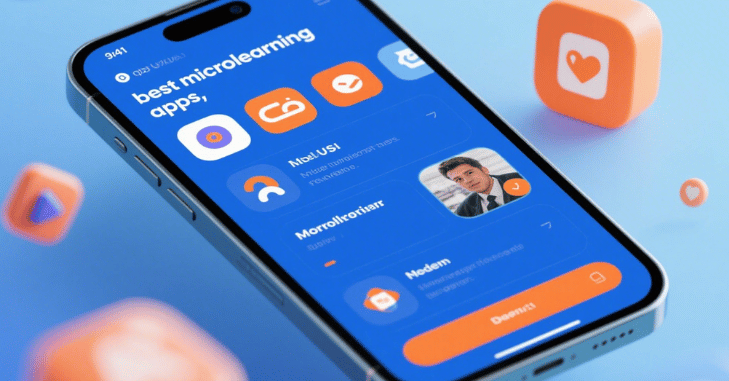
Microlearning apps have revolutionized the way we consume knowledge by offering bite-sized, engaging content that fits seamlessly into our busy lives. Some of the best microlearning apps include Duolingo, ideal for language learners with its game-like structure; Khan Academy, which breaks down complex subjects into manageable chunks; and Blinkist, which summarizes non-fiction books into 15-minute reads or listens.
Apps like Quizlet and edApp are also popular for flashcard-based learning and corporate training, respectively. These platforms combine convenience, interactivity, and personalization, making them perfect for learners who want to build skills on the go without overwhelming themselves.
1. Duolingo
Best for: Learning New Languages
Duolingo remains a giant in the language-learning space. Its gamified, bite-sized lessons make it fun and easy to integrate language study into your daily routine. With options ranging from Spanish and French to Klingon and High Valyrian, Duolingo offers a language for almost every interest. The app’s AI-driven conversation practice and speech recognition features simulate real-life conversations, enhancing both comprehension and pronunciation skills.
Pros:
- Extensive language selection
- Fun, game-like interface keeps users engaged
- Adaptive learning paths that evolve with your progress
Cons:
- May not satisfy advanced or professional-level learners
- Limited grammar explanation
2. Blinkist
Best for: Reading Summarized Non-Fiction Books
If you love books but lack the time to read full volumes, Blinkist is your go-to app. It condenses thousands of non-fiction titles into 15-minute reads or audio blinks. Topics span from productivity and psychology to business strategy and health. Perfect for your commute, gym session, or lunch break, Blinkist allows you to stay intellectually nourished even on your busiest days.
Pros:
- Vast and diverse library
- Audio and text versions for versatility
- Regularly updated with trending titles
Cons:
- Summaries may oversimplify complex ideas
- Not ideal for deep dives into subjects
3. Elevate
Best for: Brain Training and Cognitive Skills
Elevate is a personalized brain training app designed to boost focus, processing speed, memory, and analytical thinking. It provides daily workouts tailored to your performance and preferences, with mini-games that are both challenging and fun. Over time, you’ll notice improvements not just in-game scores, but also in real-world cognitive tasks like writing emails or performing mental math.
Pros:
- Evidence-based and designed with educational experts
- Beautiful, user-friendly interface
- Detailed performance tracking and feedback
Cons:
- Full access locked behind a subscription
- May feel repetitive over long-term use
4. LinkedIn Learning
Best for: Professional Development
Previously known as Lynda.com, LinkedIn Learning offers short, skills-based courses across industries like marketing, software development, design, and leadership. Videos are concise, often under 10 minutes, and come with downloadable resources. Courses are led by industry experts, and completion certificates can be displayed on your LinkedIn profile, making it a valuable tool for career advancement.
Pros:
- Trusted and credible instructors
- Large course variety with new content added frequently
- Integration with LinkedIn for visibility
Cons:
- Requires a paid subscription after a trial period
- Less interactive compared to gamified app
5. Khan Academy

Best for: Academic Subjects
Though often associated with traditional education, Khan Academy effectively incorporates microlearning techniques. The platform breaks down complex subjects like calculus, physics, and economics into short video lessons accompanied by interactive exercises. It’s perfect for students looking to supplement school education or adults revisiting foundational concepts.
Pros:
- Completely free with no ads
- Suitable for all age groups
- Covers a wide array of academic disciplines
Cons:
- Limited on trendy topics like cryptocurrency or data science
- No gamification or reward system
6. Quizlet
Best for: Memorization and Exam Prep
Quizlet has evolved from a simple flashcard tool to a comprehensive study platform with features like AI-powered learning paths, timed quizzes, and interactive games. It’s ideal for students preparing for standardized tests or professionals working on certifications. With millions of shared study sets, you can usually find pre-made content for virtually any subject.
Pros:
- Fast and efficient memorization
- Customizable flashcards with images and audio
- Offline access and mobile compatibility
Cons:
- Inconsistent quality among user-generated sets
- Some advanced features require payment
7. Gnowbe
Best for: Corporate and Soft Skills Training
Gnowbe is a microlearning platform designed for professional environments. It focuses on leadership, communication, compliance, and onboarding training. With interactive formats like short videos, polls, and scenario-based learning, Gnowbe helps companies deliver knowledge in a more engaging way.
Pros:
- Tailored for business learning
- Mobile-first design
- Real-time analytics for employers
Cons:
- Limited appeal outside the corporate world
- Requires institutional access for full functionality
8. edX

Best for: Academic and Professional Certification Courses
edX, a trusted name in online education, has embraced microlearning through short, modular courses known as “MicroBachelors” and “MicroMasters” programs. These stackable credentials offer focused learning in fields such as computer science, business, and healthcare. With top institutions like MIT and Harvard as content partners, edX ensures high-quality instruction in brief, digestible formats.
Pros:
- Courses from top-tier universities
- Recognized certification programs
- Suitable for academic and career advancement
Cons:
- Some courses can be expensive
- Less casual or game-like than other microlearning apps
Conclusion
Microlearning apps are reshaping how we engage with education by providing dynamic, digestible content tailored to busy lifestyles. Whether you’re aiming to master a new language, enhance your mental agility, prepare for an exam, or climb the career ladder, these apps make lifelong learning accessible and enjoyable.
As the digital learning landscape continues to evolve, expect microlearning to play an even more central role in personal growth, corporate training, and academic success. The key is to find the app—or combination of apps—that best suits your goals and learning preferences. With so many powerful options available in 2025, there’s never been a better time to learn smarter, not harder.
If you want to read an interesting article about it, explore our “Digital Marketing” category.
FAQs
Microlearning apps are ideal for busy professionals, students, employees, or anyone who wants to learn new skills or knowledge quickly and efficiently.
Many microlearning apps offer free versions (e.g., Duolingo, Khan Academy), while others like Blinkist may require a subscription for full access.
Some apps offer offline modes (like Duolingo and Blinkist Premium), but it depends on the app’s features and your subscription plan.
Most microlearning apps are available on iOS, Android, and via web browsers, making them accessible on smartphones, tablets, and computers.