

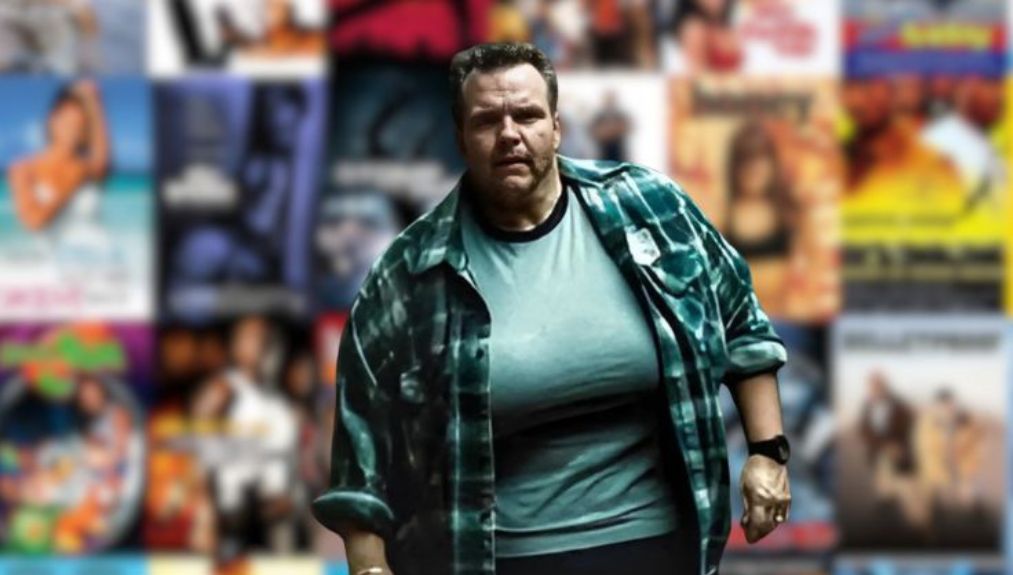
“Robert Paulson’s movies” almost always means the films of Meat Loaf, the rock singer born Marvin Lee Aday, who played Robert “Bob” Paulson in Fight Club (1999). Robert Paulson is a fictional character, not a real actor, so the filmography people want is Meat Loaf’s: from Eddie in The Rocky Horror Picture Show (1975) to the bouncer in Wayne’s World (1992), the bus driver in Spice World (1997) and Jack Black’s father in Tenacious D in The Pick of Destiny (2006). Also worth reading: Scary Characters.
This guide covers each notable film, what he did in it, a suggested watch order, how his music career shaped his acting, and why the Bob Paulson role still overshadows everything else he did on screen.
Quick Facts: The Actor Behind Robert Paulson
| Detail | Information |
|---|---|
| Real name | Marvin Lee Aday (known professionally as Meat Loaf) |
| Born | September 27, 1947, Dallas, Texas, USA |
| Died | January 20, 2022, aged 74 |
| Best-known film role | Robert “Bob” Paulson in Fight Club (1999) |
| First major film | The Rocky Horror Picture Show (1975), as Eddie |
| Signature album | Bat Out of Hell (1977), one of the best-selling albums of all time |
| Grammy | Best Rock Vocal Performance, Solo, for “I’d Do Anything for Love (But I Won’t Do That)” (1994 ceremony) |
Why People Search for “Robert Paulson’s Movies”
The name comes from one of the most quoted scenes in late-1990s cinema. In Fight Club, after Bob Paulson is killed during a Project Mayhem mission, the members chant “His name is Robert Paulson” again and again. The line spread as a meme long before that word was common, and many younger viewers who first saw the film on DVD or streaming didn’t realize the actor was the same man who sang “Paradise by the Dashboard Light.” So the search is really two questions: who played Robert Paulson, and what else was he in?
The short answer: Meat Loaf appeared in dozens of films and television episodes across roughly four decades. Most were supporting parts or cameos, because music remained his main career, but several are genuine cult favorites.
Meat Loaf’s Notable Films at a Glance
| Year | Film | Role | Type of part |
|---|---|---|---|
| 1975 | The Rocky Horror Picture Show | Eddie | Short but memorable, with a musical number |
| 1979 | Americathon | Roy Budnitz | Small supporting part |
| 1980 | Roadie | Travis W. Redfish | Lead role |
| 1985 | Rustlers’ Rhapsody | Colonel Ticonderoga | Supporting |
| 1992 | Wayne’s World | Tiny, the club bouncer | Cameo |
| 1992 | Leap of Faith | Hoover | Supporting |
| 1997 | Spice World | Dennis, the tour bus driver | Supporting |
| 1998 | Black Dog | Red | Villain |
| 1999 | Crazy in Alabama | Sheriff John Doggett | Supporting |
| 1999 | Fight Club | Robert “Bob” Paulson | Key supporting role |
| 2001 | The 51st State | The Lizard | Villain |
| 2005 | BloodRayne | Leonid | Supporting |
| 2006 | Tenacious D in The Pick of Destiny | JB’s Dad | Cameo with a song |
Fight Club (1999): The Role That Created the Name
David Fincher’s adaptation of Chuck Palahniuk’s 1996 novel stars Edward Norton as the unnamed narrator, Brad Pitt as Tyler Durden and Helena Bonham Carter as Marla Singer. Meat Loaf plays Bob, a former bodybuilder whose steroid use and treatment for testicular cancer have left him with enlarged breasts. The narrator meets him at a testicular cancer support group called “Remaining Men Together,” where Bob’s tearful hugs become the only thing that lets the narrator sleep.
Bob later drifts into Tyler’s fight club and then Project Mayhem. During a sabotage mission he is shot and killed, and when the narrator protests that Bob had a name, the members turn the protest into a chant. The moment works because Meat Loaf plays Bob with complete sincerity: he’s gentle, lonely and desperate to belong, which makes the group’s treatment of him genuinely disturbing.
For the part he wore a heavy prosthetic suit, and he spoke in interviews about how physically demanding the fight scenes were. The film had a modest theatrical run, reportedly earning around $100 million worldwide against a budget in the $60 million range, then found its huge audience on home video. Bob Paulson now regularly appears on lists of the decade’s most memorable supporting characters.
Bob in the Novel vs. the Film
Palahniuk’s book introduces Bob in much the same way, at the support group, and the “His name is Robert Paulson” chant comes from the novel. What the film adds is Meat Loaf’s physical presence. Fincher’s casting of a famous, larger-than-life rock singer as a broken, soft-spoken man gives the character an emotional weight that readers often say surprised them on first viewing.
The Rocky Horror Picture Show (1975)
Long before Fight Club, Meat Loaf made his first big-screen impression as Eddie, the leather-jacketed delivery boy who bursts out of a deep freeze on a motorcycle. He performs “Hot Patootie (Bless My Soul),” one of the film’s liveliest numbers, before Frank-N-Furter dispatches him. He had already played Eddie on stage in the Los Angeles production at the Roxy Theatre, which is how he landed the film role.
The film flopped on first release, then became the defining midnight movie, with audiences dressing up, shouting call-back lines and acting along. It has played in cinemas somewhere in the world almost continuously since the late 1970s, and it gave Meat Loaf a loyal following two years before Bat Out of Hell came out.
Roadie (1980): His Only True Leading Role
Riding the success of Bat Out of Hell, Meat Loaf starred in Alan Rudolph’s comedy Roadie as Travis W. Redfish, a Texan with a gift for fixing anything who falls into the world of touring rock bands. Blondie, Alice Cooper and Roy Orbison appear as themselves. It wasn’t a hit, but fans of his music often seek it out because it’s the one film built entirely around him.
Wayne’s World (1992)
In Penelope Spheeris’s hit comedy, Meat Loaf appears briefly as Tiny, the bouncer who lets Wayne and Garth into a club. It’s a small cameo, but Wayne’s World was one of the most successful comedies of its year, so the scene is widely seen and still shared online. It shows how filmmakers used his fame for instant recognition rather than long screen time.
Spice World (1997)
In the Spice Girls’ own film, Meat Loaf plays Dennis, the driver of the group’s Union Jack tour bus. The movie is deliberately camp and packed with celebrity cameos, and he leans into the silliness. Critics were harsh, but the film did well commercially on the band’s popularity, and it’s now a nostalgic favorite for anyone who grew up in the late 1990s.
Black Dog (1998) and The 51st State (2001)
These two films show a harder edge. In Black Dog, a trucking thriller starring Patrick Swayze, he plays Red, a menacing figure behind an illegal gun shipment. In The 51st State, a British crime comedy with Samuel L. Jackson and Robert Carlyle, he plays a drug lord known as The Lizard. Neither was a major hit, but both prove he could be genuinely threatening when a script called for it.
Tenacious D in The Pick of Destiny (2006)
Meat Loaf opens this musical comedy as the strict, religious father of young JB, Jack Black’s character. The opening song, “Kickapoo,” has him singing against a boy who wants to rock, before a poster of Ronnie James Dio comes to life. It lasts only a few minutes, yet it’s one of the best-loved sequences in the film because it plays on everything audiences knew about Meat Loaf’s operatic voice.
Other Film and Television Work
Beyond the headline titles, his credits include the satire Americathon, the western spoof Rustlers’ Rhapsody, Leap of Faith with Steve Martin, Antonio Banderas’s directorial debut Crazy in Alabama, the Arthur Miller adaptation Focus and the video game adaptation BloodRayne. He also made many television guest appearances and took part in a celebrity edition of The Apprentice.
Suggested Watch Order
- Fight Club for his best dramatic performance.
- The Rocky Horror Picture Show for the musical number that launched his screen career.
- Tenacious D in The Pick of Destiny for comedy built around his voice.
- Roadie to see him carry a whole film.
- Black Dog or The 51st State for his villain side.
- Wayne’s World and Spice World for quick, fun cameos.
Streaming availability changes often and varies by region, so check a current streaming guide or your preferred rental service before planning a marathon.
His Screen Career Decade by Decade
- 1970s: stage musicals led to Rocky Horror, and a small part in Americathon followed while Bat Out of Hell was turning him into a major recording star.
- 1980s: Roadie gave him a starring vehicle, and comedies such as Rustlers’ Rhapsody kept him on screen, though music and touring took most of his time.
- 1990s: his busiest and most successful film decade, with Wayne’s World, Leap of Faith, Spice World, Black Dog, Crazy in Alabama and, finally, Fight Club.
- 2000s onward: more villains and character parts, including The 51st State and BloodRayne, plus the much-loved Tenacious D cameo and regular television work.
Across all four decades the pattern is the same: directors cast him for presence and recognition, and he repaid them with performances that were bigger, or in Bob Paulson’s case quieter, than the size of the role suggested. That’s why fans who know only one of his films are often surprised by how many others they’ve already seen without realizing it was him.
Music First: How His Singing Career Shaped His Acting
Meat Loaf’s film choices make more sense once you remember he was a rock star first. Bat Out of Hell, written by Jim Steinman and produced by Todd Rundgren, was released in 1977 and has sold tens of millions of copies worldwide. Its sequel, Bat Out of Hell II: Back into Hell (1993), produced “I’d Do Anything for Love (But I Won’t Do That),” which topped charts in many countries and earned him his Grammy.
His songs are theatrical, long and story-driven, and he performed them almost like stage roles. That instinct shows in his films: he commits fully to characters, whether a grieving cancer survivor or a cartoonish bus driver. If you enjoy reading about long rock careers, our profile of Goo Goo Dolls frontman John Rzeznik covers a similar story of balancing studio work with touring.
Early Life and Family
Marvin Lee Aday grew up in Dallas, attended Thomas Jefferson High School and later studied at Lubbock Christian College and what was then North Texas State University before moving to Los Angeles to pursue music and theater. He was married to Leslie G. Edmonds from 1979 until their divorce in 2001 and adopted her daughter Pearl, who became a singer. Their daughter Amanda Aday became an actress. He married Deborah Gillespie in 2007, and they remained together until his death in January 2022.
Some websites quote a net worth for him, commonly around $40 million, but these are unofficial estimates rather than disclosed figures. For comparison with another performer who moved between comedy and film, see our look at Adam Sandler’s movie career and net worth.
Why Bob Paulson Still Matters
Fight Club is about men looking for identity in violence and blind loyalty, and Bob is the character who shows the cost. He’s the kindest person in the story, and the group he joins reduces him to a slogan the moment he dies. Fans repeat “His name is Robert Paulson” as a tribute, but in the film it’s also a warning. Meat Loaf’s warm, unguarded performance makes both readings work, which is why his most famous screen role now carries the character’s name rather than his own.
Final Thoughts on Robert Paulson’s Movies
If you came looking for Robert Paulson’s movies, the list you want is Meat Loaf’s: a career that ran from cult musical to blockbuster comedy to one of the most quoted dramas of the 1990s. Start with Fight Club and Rocky Horror, then work through the cameos for a full picture of a singer who took acting seriously.
Frequently Asked Questions
Who played Robert Paulson in Fight Club?
Robert “Bob” Paulson was played by Meat Loaf, the American singer and actor born Marvin Lee Aday in Dallas, Texas, in 1947. The role is widely considered his best dramatic performance.
Is Robert Paulson a real person?
No. Robert Paulson is a fictional character from Chuck Palahniuk’s novel Fight Club and the 1999 film. “Robert Paulson’s movies” refers to Meat Loaf’s filmography.
What are Meat Loaf’s most famous movies?
His best-known films are Fight Club, The Rocky Horror Picture Show, Wayne’s World, Spice World, Black Dog and Tenacious D in The Pick of Destiny. Roadie is notable as his only true leading role.
What does “His name is Robert Paulson” mean?
It’s the chant Project Mayhem members repeat after Bob dies on a mission. It began as the narrator insisting Bob was a person with a name, and it shows how the group turns even his death into a slogan.
When did Meat Loaf die?
Meat Loaf died on January 20, 2022, at the age of 74. His music and film roles, especially Bob Paulson, remain widely celebrated.
Looking for more film guides? Try Jorge Rivi Ayala’s Movies.