

Understanding cat colors gets easier once you separate coat shade from coat pattern. Familiar names like orange, gray, and brown often have official feline terms. This guide explains those names, common patterns, basic genetics, and practical identification tips for U.S. readers.
| What you see | Common name | Common official term | Key clue |
|---|---|---|---|
| Deep black | Black | Black | Dark pigment throughout the coat |
| Orange or ginger | Orange | Red | Often shows visible tabby markings |
| Gray | Gray | Blue | Diluted black pigment |
| Pale orange | Buff | Cream | Diluted red pigment |
| Warm brown | Brown | Chocolate | Reduced black pigment |
| Reddish brown | Light brown | Cinnamon | Rare brown-family shade |
| Pale pinkish gray | Lavender | Lilac | Diluted chocolate |
| Pale beige | Beige | Fawn | Diluted cinnamon |
| White | White | White | White can mask other genetic colors. |
Cat colors come from pigment genes, modifiers, white spotting, dilution, and pattern genes. Common shades include black, red, blue, cream, chocolate, cinnamon, lilac, and fawn. Patterns such as tabby, tortoiseshell, calico, bicolor, smoke, and colorpoint change how those shades appear across the coat.
Key Takeaways
- Color describes the pigment you see, while pattern describes how that pigment is arranged.
- Gray is usually called blue, orange is red, and buff is cream in cat-fancy terminology.
- Tabby, calico, tortoiseshell, bicolor, and pointed are patterns rather than breeds.
- Dilution can turn black into blue and red into cream.
- A coat alone cannot reliably identify breed or personality.
WebDorBit already covers practical feline care in its Pets section. Coat terminology belongs in that same everyday ownership context. Knowing the right terms helps with adoption forms, shelter descriptions, veterinary records, and breed research.
Cat Colors vs. Coat Patterns: What Is the Difference?
Color means the basic pigment or shade visible in the coat. Pattern describes how that color appears across the body. The Cat Fanciers’ Association separates color from patterns such as tabby, bicolor, pointed, shaded, and smoke.
This distinction prevents a common naming mistake. Tabby is not a breed, and neither are calico or tortoiseshell. Many pedigreed and mixed-breed cats can share the same color or pattern.
Common Feline Coat Shades and Their Official Names
The International Cat Association uses several names that differ from everyday American speech. Orange is commonly registered as red, while gray is often called blue. Buff usually falls under cream, and some brown coats are called chocolate or seal.
Black and red are major starting points in feline color genetics. Dilution changes black toward blue and red toward cream. Other gene variants can produce chocolate, cinnamon, lilac, fawn, silver, or white effects.
| Official term | Everyday description | Typical genetic relationship |
|---|---|---|
| Black | Black | Full dark pigment |
| Red | Orange, ginger, marmalade | Orange-linked pigment expression |
| Blue | Gray | Diluted black |
| Cream | Buff, pale orange | Diluted red |
| Chocolate | Warm brown | Brown-family pigment variant |
| Cinnamon | Reddish brown | Lighter brown-family variant |
| Lilac | Pinkish gray | Diluted chocolate |
| Fawn | Pale beige | Diluted cinnamon |
How Genetics Create Different Coat Shades
Coat genetics control pigment type, intensity, placement, and visibility. UC Davis describes agouti, brown, dilution, colorpoint, and white-related genes as important coat factors. Different combinations can change both the shade and the arrangement of pigment.
Dilution is one of the easiest effects to recognize. It spreads pigment differently through each hair shaft, making dark shades look softer. That is why black can appear blue-gray, while red can appear cream.
White can work differently from ordinary pigment shades. Some white-related genes reduce or mask visible pigment across part or all of the body. A white-looking coat can therefore hide color information that genetics still carry.
Why Orange, Tortoiseshell, and Calico Often Relate to Sex
The orange color gene is carried on the X chromosome. Females usually have two X chromosomes, while males usually have one. That makes mixed black-and-red tortoiseshell coloring much more common in females.
Calico adds white spotting to a coat with black-family and red-family areas. Tortoiseshell usually blends those colors without large white areas. A torbie combines tortoiseshell coloring with visible tabby markings.
Why Pointed Coats Are Darker on the Face, Ears, Feet, and Tail
Colorpoint genetics make pigment production temperature-sensitive. Cooler body areas develop darker colors than warmer areas. UC Davis lists the face, ears, paws, and tail among typical darker point locations.
Pointed does not automatically mean Siamese. Ragdolls, Birmans, Balinese, Tonkinese, and mixed-breed cats can also show this pattern. TICA treats pointed as a pattern rather than a breed identity.
The Main Coat Patterns You Will See
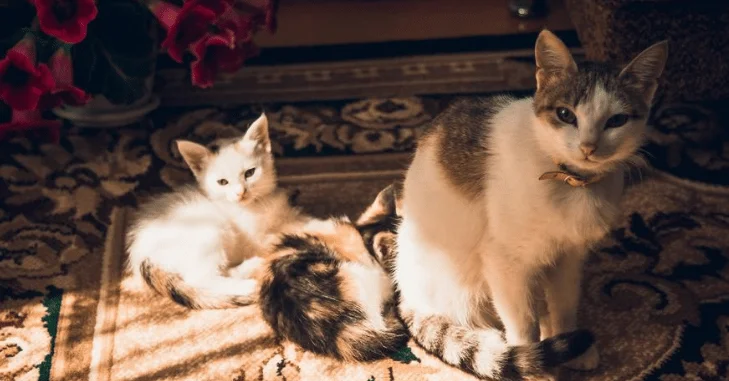
Solid coats show one main shade without obvious white spotting or strong tabby patterning. Young animals may still display faint ghost markings. Those marks can fade as the adult coat develops.
Tabbies can be mackerel, classic, spotted, or ticked. Mackerel coats show narrow stripes, while classic coats show broader swirls. Spotted coats break markings into spots, and ticked coats show banded hairs.
Bicolor coats combine white with another shade or pattern. Van-style coats are mostly white, with color concentrated near the head and tail. “Tuxedo” is a popular nickname for certain black-and-white coats, not an official breed name.
Smoke, shaded, and chinchilla effects involve lighter hair near the roots with darker pigment toward the tips. The Cat Fanciers’ Association distinguishes these effects by how much of each hair carries color. These coats can look dramatically different as the fur moves.
Which Shades Are Considered Rare?
Chocolate, cinnamon, lilac, and fawn are less common in the general pet population. TICA specifically describes those shades as seldom seen outside certain lines. Their rarity depends on genetic frequency, breed background, and local population.
Rare does not mean healthier, more valuable, or more purebred. A mixed-breed animal can carry unusual color genes. A common-colored animal can still belong to a carefully documented pedigree.
Does Coat Color Predict Breed, Personality, or Health?
Coat appearance alone cannot prove breed. TICA notes that the same colors and patterns occur across many breeds and domestic cats. Body structure, pedigree, ancestry, and breed standards provide stronger identification evidence.
Color also does not give a dependable personality forecast. Internet stereotypes about orange, tortie, or black cats can be entertaining. Individual temperament depends on genetics, early handling, environment, health, and learning.
One health association deserves separate attention. Cornell reports a higher congenital deafness risk in all-white cats with blue eyes. Blue eyes do not mean blindness, and many white animals hear normally.
Coat appearance is not a substitute for veterinary care. If your pet has hair loss, itching, skin changes, or digestive trouble, focus on health signs. WebDorBit also has a sensitive-stomach cat food guide for nutrition-related reading.
How to Identify Your Pet’s Coat Color
- Look at the darkest colored hairs in natural daylight.
- Decide whether the base shade is black-family, red-family, white, or a diluted shade.
- Check for stripes, spots, swirls, ticking, patches, or white areas.
- Look at the roots for smoke or shaded effects.
- Check whether the face, ears, feet, and tail are darker than the torso.
- Use official color terms only after identifying the visible shade and pattern.
Natural light gives a better reading than warm indoor bulbs. Long hair can also blur stripes and make patterns harder to classify. Photos from several angles help when comparing a coat with association guides.
Frequently Asked Questions About Coat Color
What Cat Colors Can Cats Have?
Cats can appear black, red, blue, cream, chocolate, cinnamon, lilac, fawn, white, silver, and related combinations. Patterns can mix several shades across one coat. Breed standards may use more specific names for particular variations.
Are Gray Cats Officially Called Blue?
They often are in breed and show terminology. TICA lists blue as the official term commonly called gray or grey. The shade results from dilution affecting black pigment.
Why Are Calico and Tortoiseshell Cats Usually Female?
The red and black color expression is tied to the X chromosome. Females usually have two X chromosomes, allowing both color pathways to appear. Males with these mixed patterns are uncommon because their genetics must differ from the usual XY pattern.
Are All Pointed Cats Siamese?
No, “pointed” is a coat pattern rather than a breed label. Several pedigreed breeds can show darker points on the extremities. Mixed-breed animals can inherit the same temperature-sensitive color pattern.
Are White Cats With Blue Eyes Always Deaf?
No, but their congenital deafness risk is higher. Cornell reports the strongest association in all-white animals with two blue eyes. Hearing testing is more reliable than guessing from appearance.
Putting the Color Names Together
Once you know the main cat colors, describe the shade first and the pattern second. A pet might be a blue tabby, a red-and-white bicolor, a black tortoiseshell, or a seal point. This method matches how major feline organizations separate color from pattern.
You can use those terms when speaking with shelters, veterinarians, breeders, or other owners. Clear descriptions also make lost-pet notices and adoption profiles more precise. For more ownership topics, browse WebDorBit’s pet guides.