
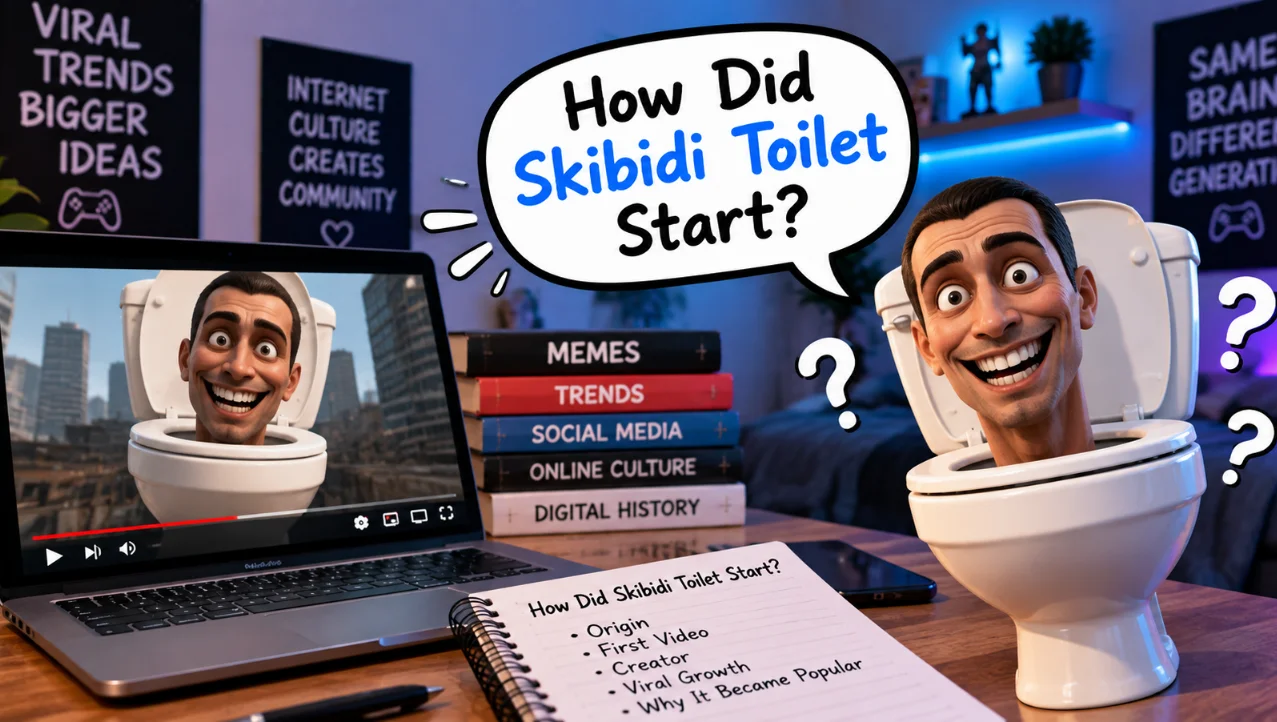
If you have ever typed “how did Skibidi Toilet start” into Google, the answer begins with one strange YouTube Short from 2023. Animator Alexey Gerasimov, better known online as DaFuq!? Boom! Combined Source Filmmaker animation, game-inspired visuals, nightmare imagery, and a viral music mashup. What looked like a tiny absurdist joke soon grew into an ongoing action story followed by millions of young viewers.
Direct answer: Skibidi Toilet began on February 7, 2023, when animator Alexey Gerasimov, known as DaFuq!? Boom! uploaded an 11-second YouTube Short made in Source Filmmaker. A singing human head rose from a toilet to viral music, and the gag soon expanded into a serialized war between toilet creatures and camera-headed fighters.
| How Did Skibidi Toilet Start | Detail |
|---|---|
| Creator | Alexey Gerasimov, known online as DaFuq!? Boom! |
| First episode | February 7, 2023 |
| Original format | YouTube Short |
| First video’s length | About 11 seconds |
| Animation software | Valve’s Source Filmmaker |
| Early visual influence | Garry’s Mod and Half-Life-style machinima |
| Music | Mashup using “Give It to Me” and “Dom Dom Yes Yes” |
| Turning point | The loose shorts developed into a continuing story by around episode 7 |
| Main early conflict | Singing toilet creatures versus Cameramen and other hardware-headed characters |
TL;DR
- The first short appeared on YouTube on February 7, 2023.
- Gerasimov already had years of experience making Source Filmmaker animations.
- His visual style drew heavily from old Garry’s Mod and Half-Life machinima culture.
- Recurring nightmares involving toilet-like creatures became a central image.
- Viral music made the first absurd clip instantly recognizable.
- Later episodes added Cameramen, battles, cliffhangers, and increasingly detailed lore.
- Short episodes and frequent releases helped the project spread among younger online audiences.
How Did Skibidi Toilet Start in 2023?
The first upload was strikingly simple. A camera moves toward a bathroom, a man’s head emerges from a toilet, and the character sings before lunging toward the viewer. Know Your Meme dates that original Short to February 7, 2023, and describes it as the beginning of the series. Nothing in that first 11-second clip explains a giant fictional universe.
There are no lengthy character introductions, dialogue scenes, or rules for viewers to memorize. Its appeal comes from the opposite approach: the video gives viewers an unexplained image that is funny, unsettling, and easy to remember. That distinction helps explain the origin better than calling it random “brain rot.”
Gerasimov didn’t start from zero, because his animation style developed through years of exposure to internet machinima and Valve game culture. The toilet gag became the point where several older influences suddenly clicked into place.
The Creator Had Been Making Strange Animations for Years
Alexey Gerasimov was already an experienced animator before the toilet characters appeared. In a Forbes interview, he described the project as a combination of ideas and styles he had used across earlier work. He also credited the independent filmmaking community around Garry’s Mod with helping shape his creative approach.
Garry’s Mod became famous for letting players manipulate characters, props, and locations based on Valve games such as Half-Life 2. That freedom produced an entire generation of strange comedy videos and amateur machinima on YouTube. Gerasimov later worked extensively with Source Filmmaker, Valve’s dedicated 3D animation program.
This gaming connection is easy to miss if you first encountered the series through children’s memes. Its visual DNA reaches back to an older YouTube culture built around distorted game characters and deliberately awkward animation. Readers interested in that side of online culture can also browse Webdorbit’s gaming coverage.
The Toilet Idea Came Partly From Gerasimov’s Nightmares
The bizarre central image wasn’t created just because toilets make an easy joke. Gerasimov told Forbes that recurring nightmares played a role in the idea, including dreams involving heads appearing from toilets. He had also explored related imagery in earlier animations before releasing the 2023 Short. That background explains why the original clip feels more unsettling than a normal bathroom joke.
The stretched facial expressions, sudden movement, distorted proportions, and direct attack on the camera give it a mild horror quality. Gerasimov blended that discomfort with comedy rather than treating the nightmare imagery seriously. The combination proved unusually adaptable. A toilet with a human head can look ridiculous in one scene and threatening in the next.
That flexibility later let the creator shift from a tiny gag to battles, monsters, giant characters, and science-fiction storytelling.
Where Did the Famous “Skibidi” Music Come From?
The first videos also borrowed momentum from music that was already circulating through online meme culture. Early episodes used a mashup drawing from Timbaland’s 2007 song “Give It to Me” and Bulgarian artist Biser King’s “Dom Dom Yes Yes.” The repeated vocal pattern became closely associated with the toilet characters.
“Dom Dom Yes Yes” had gained online attention before the animated series appeared. That meant the sound carried some familiarity even though the visual idea was new. Pairing recognizable audio with an unexpected image made the first song easier to remember and imitate. This is an important part of the origin because internet memes often build on existing material rather than appearing as isolated inventions.
Gerasimov combined a popular sound, established machinima techniques, familiar game assets, and his own recurring visual ideas. The result felt new even though several ingredients already belonged to internet culture.
The Moment a Joke Became a Story
The earliest clips were much looser than the later episodes. Gerasimov told Forbes that the Shorts had formed into a more continuous long-form story by around episode 7. From then on, viewers no longer returned only to see another singing toilet. Cameramen became recognizable opponents, while later characters included Speakermen, TV-headed fighters, larger combat units, and increasingly powerful enemies.
Episodes started depending on earlier events, and battles produced consequences that fans could discuss between uploads. A bizarre meme therefore gained one feature that many viral jokes never develop: continuity.
That change gave the audience a reason to follow instead of watching once and moving on. Viewers could debate alliances, look for background clues, predict future battles, and explain the story to other fans. WIRED reported that this participatory lore became a major part of how the audience engaged with the videos.
Why Did It Become So Popular?
Short-form distribution was one major advantage. The early episodes could deliver a complete visual surprise within seconds, making them easy to replay, share, remix, and encounter without prior knowledge. Gerasimov also had enough animation experience to release new material rapidly during the project’s first major wave.
The almost wordless storytelling helped the videos travel across language boundaries. Viewers did not need to understand a complicated script because character movement, fighting, sound effects, and visual clues carried most of the story. WIRED identified accessibility as one factor behind the series’ global reach. The bigger reason may have been the combination of simplicity and mystery.
A child could understand that toilets and Cameramen were fighting, while dedicated fans could spend hours interpreting hidden details. That gave casual viewers and lore-focused viewers different reasons to keep watching. Internet creators often grow when audiences become participants rather than passive viewers. Fan animations, Roblox experiences, theory videos, comments, costumes, and memes let audiences extend the fictional world themselves.
Webdorbit readers interested in similar internet personalities can see how digital audiences shape creator careers in its coverage of Jack Doherty’s online career and Bryce Hall’s social media rise.
The Four-Part Origin Stack
The clearest way to understand the phenomenon is to separate its ingredients. No single song, nightmare, animation tool, or algorithm explains what happened on its own. The series emerged because those elements arrived together in a format that encouraged fast experimentation.
| Ingredient | What existed first | What the creator added | Why it mattered |
|---|---|---|---|
| Machinima culture | Garry’s Mod and Valve-game animations | His own Source Filmmaker style | Created the strange game-like visual language |
| Nightmare imagery | Gerasimov’s recurring dreams | Human heads emerging from toilets | Produced the memorable central creature |
| Viral audio | Existing online music mashups | Synchronized singing toilet characters | Made the short instantly recognizable |
| YouTube Shorts | Fast vertical video distribution | Frequent short episodes and cliffhangers | Made sharing and repeated viewing easy |
| Serialized lore | Simple conflict in early clips | Cameramen, factions, battles, recurring characters | Turned a meme into a fandom |
This “origin stack” also explains why copying the surface joke is not enough to recreate the same success. A head inside a toilet is memorable, but the continuing narrative gave people a reason to care after the initial shock disappeared. The project moved from meme mechanics to franchise-style storytelling without losing its deliberately strange appearance.
Why Gen Alpha Connected With It
For many American adults, the biggest mystery wasn’t the origin but why children cared so much. The answer is partly generational, because younger viewers are comfortable moving between videos, games, remixes, memes, and fan-created stories. A franchise no longer has to begin as a television program or movie to feel important.
The series also gives younger fans a shared reference that older people often do not understand. Confusion from parents and older viewers can make a youth meme more attractive because knowing the joke becomes a form of social membership. WIRED noted a similar feedback loop around the series and younger audiences.
That is why the phenomenon fits naturally beside YouTubers, TikTok creators, games, streaming culture, and online celebrity news. Those topics increasingly overlap instead of occupying separate entertainment categories. You can find more related pop-culture coverage in Webdorbit’s entertainment section.
What the Origin Tells Us About Internet Culture
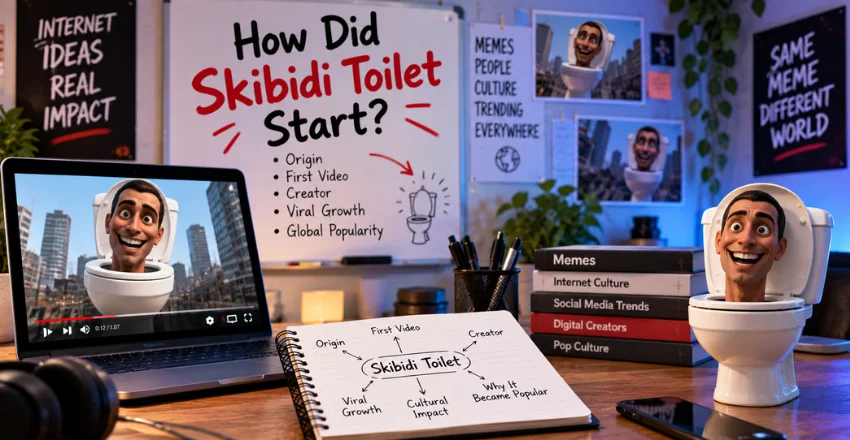
The story shows that huge online properties can begin with extremely small creative experiments. Gerasimov didn’t need a television studio to introduce the central idea, and the first episode didn’t need a detailed explanation. It needed one memorable image, a recognizable sound, and enough curiosity to make people watch another clip.
Its growth also shows why internet-native storytelling can confuse outsiders. Traditional shows explain characters and plot through dialogue, while these videos often expect viewers to infer events from movement and visual clues. Fans then fill the gaps through comments, theories, games, and explanatory videos.
For creators, that does not mean every strange Short can become a franchise. The stronger lesson is that recognizable style and continued development matter after the first viral moment. Webdorbit’s guide to content creation services and production planning offers a broader look at how modern digital content gets developed and maintained.
The Bottom Line
What began in February 2023 was a compact collision of old internet animation culture and newer short-form video habits. Gerasimov brought years of machinima experience and personal nightmare imagery to a viral sound, then kept developing the concept instead of leaving it as one joke. By adding recurring characters and an escalating conflict, he gave viewers something that could grow beyond its first meme.
That progression is the key to understanding the phenomenon. The first clip attracted attention because it was strange, but the developing story gave audiences a reason to stay. For more on entertainment, creators, gaming, and internet culture, keep exploring Webdorbit.
FAQs
How did Skibidi Toilet start?
It started with an approximately 11-second YouTube Short uploaded by Alexey Gerasimov on February 7, 2023. The clip showed a human head rising from a toilet and singing to a viral music mashup. Gerasimov then released more shorts and gradually expanded the concept into a continuing battle story.
Who created Skibidi Toilet?
Alexey Gerasimov, known online as DaFuq!? Boom! created the original animated series. He had years of experience with Source Filmmaker and drew inspiration from the Garry’s Mod machinima community. His earlier animations and recurring nightmares also influenced the strange visual style.
What song is used in Skibidi Toilet?
The recognizable early theme comes from a mashup involving Timbaland’s “Give It to Me” and Biser King’s “Dom Dom Yes Yes.” The repeated vocal sounds became inseparable from the toilet characters after the videos spread online. The audio also connected to earlier viral meme activity before the series appeared.
Was Skibidi Toilet made in Garry’s Mod?
The original series was animated in Valve’s Source Filmmaker rather than produced directly in Garry’s Mod. Gerasimov has said that the GMod filmmaking community strongly influenced his style, and the videos use visual ideas associated with Valve’s games. That shared history explains why many viewers associate the project with Garry’s Mod.
Why did Skibidi Toilet go viral?
Its short episodes combined bizarre imagery, recognizable audio, simple visual storytelling, frequent releases, and an expanding plot. Those qualities made clips easy to discover while giving committed viewers reasons to return. Fan theories, games, remixes, and other community creations then pushed the phenomenon beyond the original uploads.
What does “skibidi” mean?
In the original series, “skibidi” is most closely associated with the rhythmic vocal sounds the toilet characters use. Online, younger users later adopted the word more broadly as flexible meme slang rather than giving it one fixed definition. Its meaning can therefore change depending on whether someone means the series, the sound, or internet slang.