

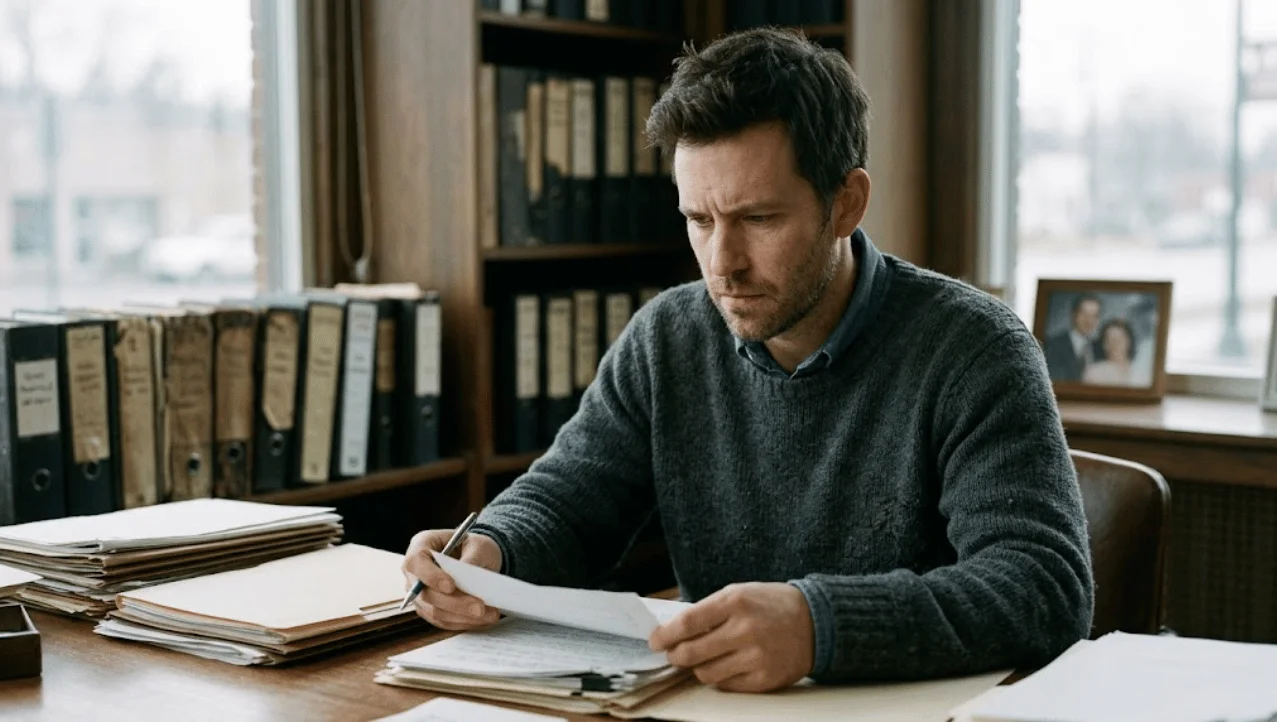
The True Story movie turns a disturbing real criminal case into a tense drama about truth, deception, and journalism. Released in 2015, the film stars Jonah Hill as journalist Michael Finkel and James Franco as convicted murderer Christian Longo. Its strangest details come from events that happened outside Hollywood.
Direct answer: True Story is based on the real relationship between journalist Michael Finkel and Christian Longo. Longo was accused of murdering his wife and three children before fleeing the United States. After his arrest, Finkel learned that Longo had been using his name, beginning an unusual relationship that later became a book and movie.
True Story Movie at a Glance
| Detail | Information |
|---|---|
| Movie | True Story |
| Release year | 2015 |
| Genre | Crime drama, mystery, thriller |
| Director | Rupert Goold |
| Main cast | Jonah Hill, James Franco, Felicity Jones |
| Jonah Hill plays | Michael Finkel |
| James Franco plays | Christian Longo |
| Based on | Michael Finkel’s nonfiction book and real events |
| U.S. rating | R |
| Runtime | About 100 minutes |
| Main themes | Truth, manipulation, journalism, crime |
Is the True Story Movie Based on a True Story?
Yes, the central premise of True Story is based on real events. Michael Finkel was a journalist whose career suffered after problems emerged with a New York Times Magazine article. Soon afterward, he discovered that accused murderer Christian Longo had been using Finkel’s identity while hiding in Mexico.
That strange connection became the foundation of their relationship. Finkel began communicating with Longo after Longo was returned to the United States. Their conversations eventually supplied material for Finkel’s nonfiction book, True Story: Murder, Memoir, Mea Culpa.
The film adapts that relationship rather than presenting itself as a documentary. Scenes, conversations, and dramatic moments are shaped for the screen. Viewers should therefore separate the documented case from the movie’s presentation of it.
What Is True Story About?
The movie begins during a professional crisis for Michael Finkel. Jonah Hill portrays him as an ambitious journalist facing the consequences of serious problems with one of his stories. Losing his position leaves him searching for a way to rebuild his career.
Then Finkel receives extraordinary information. Christian Longo, a man accused of killing his family, had reportedly used Finkel’s identity while on the run. That connection gives Finkel a potential story unlike anything else he has covered.
James Franco’s Longo is calm, guarded, and difficult to read. He agrees to speak with Finkel, but their exchanges soon become more complicated than a typical reporter interview. Finkel wants answers, while Longo seems more interested in controlling how his story will be told.
The result is less a conventional murder mystery than a psychological contest. The audience already knows that Longo faces devastating accusations. The suspense comes from deciding when he is telling the truth and when he is manipulating the person listening.
The Real Michael Finkel
Michael Finkel worked as a journalist before the events the film portrays. His professional downfall is important because it explains why the Longo story becomes so significant to him. It offers both a compelling assignment and a possible path toward professional recovery.
Finkel’s connection to Longo also raises an uncomfortable journalistic question. A reporter normally tries to maintain distance from a subject. Their relationship becomes harder to define as interviews, personal conversations, and competing motives begin to overlap.
Jonah Hill’s performance emphasizes this tension rather than his familiar comedic style, much like the range shown in Kevin Hart’s movies. His Finkel often appears fascinated by the possibility of obtaining the definitive account. That fascination creates much of the movie’s unease.
Who Was Christian Longo?
Christian Longo was an Oregon man accused of murdering his wife, Mary Jane, and their three children. Authorities discovered the bodies in coastal Oregon in December 2001. Longo subsequently became the subject of a search that extended beyond the United States. Elsewhere on the site: Who Was Chip Gaines First Wife.
He was eventually arrested in Mexico. The unusual connection to Finkel emerged because Longo had presented himself under the journalist’s identity while abroad. That detail sounds like something from a screenplay, yet it forms part of the case behind the film.
Longo was returned to Oregon and prosecuted for the killings. His interactions with Finkel continued around the criminal proceedings. Those exchanges became central to Finkel’s later account of the case.
How Accurate Is the Movie?
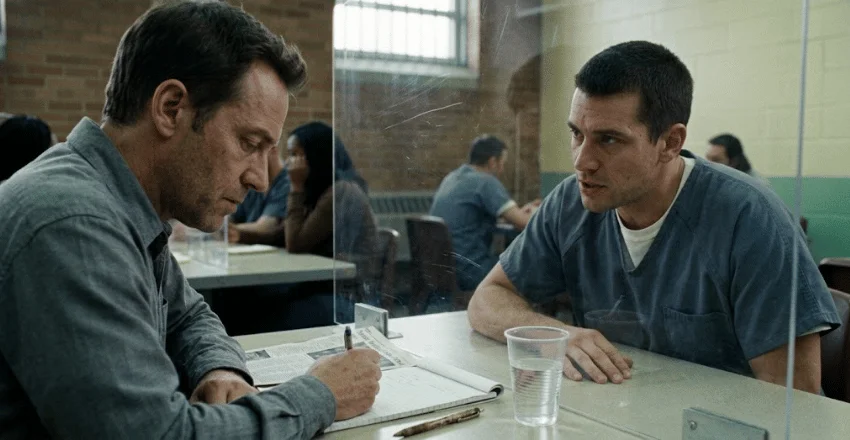
The film’s broad framework follows documented events. Finkel was a journalist facing professional disgrace, and Longo was accused of murdering his family. Longo also used Finkel’s identity before the two men developed their unusual relationship.
Accuracy becomes less straightforward at the scene level. Feature films routinely condense timelines and construct dialogue to turn complex events into a coherent narrative. True Story should therefore be viewed as a dramatization built around real people and crimes.
This distinction matters because the movie focuses heavily on private conversations. A viewer cannot assume every exchange occurred exactly as presented. The safest approach is to treat the major historical events separately from dialogue created or reconstructed for the screen.
Michael Finkel and Christian Longo’s Unusual Connection
The identity theft creates one of the strangest reporter-subject relationships in modern crime storytelling. Finkel has an obvious reason to investigate someone who used his name. Longo, meanwhile, gains access to a journalist eager to understand his version of events.
Their conversations raise a constant question: who is using whom. Finkel wants information that might become a major story and restore part of his reputation. Longo has his own reasons for deciding what to reveal and how to present himself.
That tension gives the movie its strongest psychological element. Journalism depends on extracting reliable information from sources. Here, the source is a murder defendant whose credibility is itself one of the central issues.
Why Felicity Jones’ Character Matters
Felicity Jones plays Jill Barker, Finkel’s partner in the film. She provides an outside perspective on the increasingly consuming relationship between Finkel and Longo. Her skepticism contrasts with Finkel’s fascination with his subject.
Jill also helps the story move beyond the interview room. She sees risks that Finkel can overlook while pursuing answers and professional redemption. Her presence forces viewers to consider the personal cost of becoming absorbed in a disturbing case.
The character also strengthens one of the film’s main themes. Intelligence and professional experience don’t make someone immune to manipulation. Emotional distance can disappear when ambition and curiosity become involved.
True Story Ending Explained
Spoilers follow for the movie’s ending. Longo’s trial exposes the central problem that has followed Finkel throughout the story. Longo can explain, but hearing a detailed account doesn’t automatically make it trustworthy.
Longo is convicted, and the relationship between the two men changes once Finkel more fully recognizes the manipulation involved. The movie refuses to transform their conversations into a clean journalistic triumph. Instead, the ending emphasizes how difficult it can be to recover truth from someone skilled at reshaping a narrative.
The closing material also reminds viewers that the story extends beyond the film. Finkel turned his experiences into the book that inspired the adaptation. The case consequently became a story about storytelling itself, not only about solving a crime.
What the Movie Says About Truth and Journalism
The title True Story works on more than one level. It promises a film rooted in real events, yet the characters spend much of the story questioning what “true” means. Facts, memories, professional narratives, and deliberate lies repeatedly collide.
Finkel’s own history makes that theme especially pointed. He enters his relationship with Longo after his credibility has already suffered. The film can therefore examine journalistic truth through a protagonist who cannot simply claim moral distance from his subject.
Longo represents a different problem. A convincing story can sound coherent without being reliable. The movie asks viewers to watch how presentation, confidence, and selective information can influence what another person accepts.
How the Film Differs From a Typical True-Crime Thriller
Viewers expecting constant police investigation may find True Story unusually restrained. Much of its tension develops through interviews, conversations, and questions about credibility. Violence is the reason for the story, but psychological manipulation drives the drama.
That approach also explains the casting of Hill and Franco. Both actors spend long stretches facing each other rather than moving through conventional thriller set pieces. Small shifts in tone and trust matter more than action.
The result sits between several genres. It contains elements of crime drama, courtroom storytelling, journalism, and psychological thriller. Fight Club, one of the Robert Paulson movies people still debate, shares some of that psychological edge. That mixture helps explain why different viewers can come away focusing on different parts of the film.
Is True Story Worth Watching?
True Story will likely appeal most to viewers who prefer crime dramas centered on psychology rather than action. Its strongest material comes from the uneasy conversations between Finkel and Longo. The real circumstances behind their connection add another layer of tension.
People interested in journalism may also find the ethical questions compelling. The movie examines credibility from both sides of an interview. Neither asking questions nor receiving answers guarantees the truth.
Viewers looking for a traditional mystery should know what to expect. The movie’s central question isn’t simply who committed a crime. It is how people recognize truth when someone can tell a persuasive story.
Frequently Asked Questions About the True Story Movie
Is the True Story movie real?
Yes, True Story is based on actual people and events surrounding Michael Finkel and Christian Longo. The basic relationship, Longo’s criminal case, and his use of Finkel’s identity have factual foundations. The film still dramatizes events for storytelling purposes.
Who does Jonah Hill play in True Story?
Jonah Hill plays journalist Michael Finkel. The role differs from the comedy performances Hill is best known for. His character’s interviews with Longo form the center of the movie.
Who does James Franco play?
James Franco portrays Christian Longo. Longo was accused and later convicted of murdering his wife and three children. His interactions with Finkel supplied the film’s central psychological conflict.
What book is the movie based on?
The film is adapted from Michael Finkel’s nonfiction book True Story: Murder, Memoir, Mea Culpa. Finkel wrote about his career crisis and relationship with Longo. The book provides additional context beyond the dramatized screen version.
Is True Story a documentary?
No, it is a scripted feature film based on real events. Actors portray the people involved, and dramatic storytelling techniques shape the narrative. Viewers seeking a factual record should compare the film with documented reporting about the case.
What is the main point of True Story?
The film examines how difficult truth can become when ambition, deception, and storytelling overlap. Finkel needs reliable information, while Longo controls what he chooses to tell him. Their relationship turns that conflict into the movie’s central source of tension.
The Real Story Makes the Movie Stranger
The most remarkable part of True Story may be that its central setup required little invention. An accused family murderer really did use a journalist’s identity before developing a relationship with that journalist. That fact gives the film an unsettling foundation.
The movie also offers a useful reminder about films drawn from real crimes. “Based on a true story” doesn’t mean every scene should be treated as a historical record. The real events provide the foundation, while filmmakers shape those events into a dramatic narrative.
For viewers interested in crime, journalism, and psychological manipulation, True Story offers more than a standard murder drama. Its lasting question concerns the stories people tell and why others believe them. That question remains uncomfortable long after the credits end.