


The best deck railing ideas come down to three choices: the material (wood, composite, aluminum, steel cable or glass), the infill style (vertical balusters, horizontal rails, cable, glass or decorative panels) and whether the design meets your local code for height, opening size and strength. Get those right and the finishing touches, such as color, lighting and planters, fall into place.
Below you will find a side-by-side comparison of materials, the styles that suit different homes, the code points US inspectors check most often, a step-by-step DIY sequence, and practical ways to keep the budget under control without cutting corners on safety.
Deck railing ideas at a glance
| Material | Look | Maintenance | Rough installed cost per linear foot | DIY friendly? |
|---|---|---|---|---|
| Pressure-treated wood | Traditional, rustic | High: stain or seal every 2 to 3 years | Lowest, often under $60 | Yes |
| Cedar or hardwood | Warm, natural | Moderate to high | Low to mid | Yes |
| Composite or vinyl | Clean, uniform | Low: occasional washing | Mid | Yes, with kits |
| Powder-coated aluminum | Modern, slim | Very low | Mid to high | Yes, with kits |
| Stainless steel cable | Minimal, open views | Low: re-tension occasionally | High | Possible, but precise |
| Glass panels | Contemporary, unobstructed | Moderate: regular cleaning | Highest | Usually professional |
Prices swing widely by region, deck height, number of stairs and brand, so treat the table as a way to compare options rather than a budget. A written quote from a local installer, based on your actual measurements, is the only figure worth planning around.
Railing materials compared
Wood
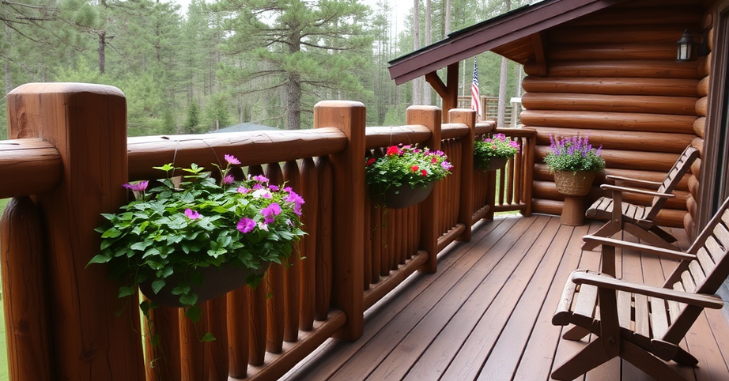
Wood remains the default because it is inexpensive, easy to cut on site and matches most existing decks. Pressure-treated pine is the budget option, while cedar, redwood and tropical hardwoods look richer and resist decay naturally. The trade-off is upkeep: plan to clean and re-stain every couple of years, and walk the railing each spring looking for loose balusters, popped fasteners and split top rails. Wood suits cabins, farmhouses and traditional homes, and it is the easiest material to repair one piece at a time.
Composite and vinyl
Composite and vinyl systems usually come as kits with post sleeves, rails and balusters that slide or bracket together. They do not rot, splinter or need painting, which makes them a strong fit for humid climates and busy households with kids and pets. They cost more up front than wood, and colors are limited to what the manufacturer sells, but lifetime cost often comes out lower once you count the years of skipped staining. Post sleeves fit over a structural wood post, so the framing underneath still has to be solid.
Aluminum and steel
Powder-coated aluminum gives a slim, modern profile and will not rust. The finish is what makes it last, so quality matters: thorough coverage on edges, corners and welds is what prevents chipping and corrosion, as explained in our look at how powder coating improves edge coverage on complex parts. Steel is stronger and heavier. Use galvanized or powder-coated steel inland, and marine-grade (316) stainless near the coast, where salt air quickly attacks lower grades.
Cable and glass
Cable and glass are the go-to choices when the view is the point. Stainless cables run horizontally or vertically between posts, and glass panels sit in a frame or on standoffs. Both need careful engineering. Cables must be tensioned tightly enough that a 4 inch sphere cannot be pushed between them, which usually means more intermediate posts or spacers than people expect. Glass must be safety glazing, meaning tempered or laminated, and it shows water spots and pollen, so plan for regular cleaning.
Pros and cons by material
| Material | Main advantage | Main drawback |
|---|---|---|
| Wood | Cheapest, easy to repair | Ongoing staining and rot risk |
| Composite or vinyl | Almost no maintenance | Limited colors, higher upfront cost |
| Aluminum | Slim, rust-free, light | Finish quality varies by brand |
| Steel cable | Near-invisible infill | Needs precise tensioning and strong end posts |
| Glass | Totally clear view | Highest cost, frequent cleaning |
Popular deck railing styles
Material sets the budget and upkeep; style sets the mood. These are the looks homeowners ask for most:
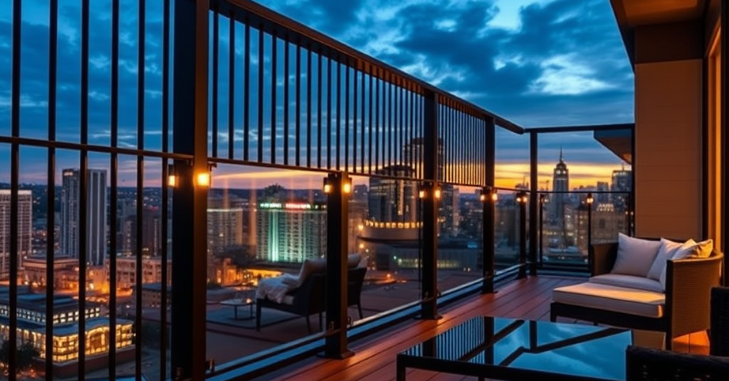
- Modern horizontal: black aluminum or steel posts with horizontal rails or cable. Check local code first, as some jurisdictions restrict climbable horizontal infill.
- Rustic lodge: chunky timber posts, rough-sawn rails and square balusters, often with a wide flat top rail for resting drinks.
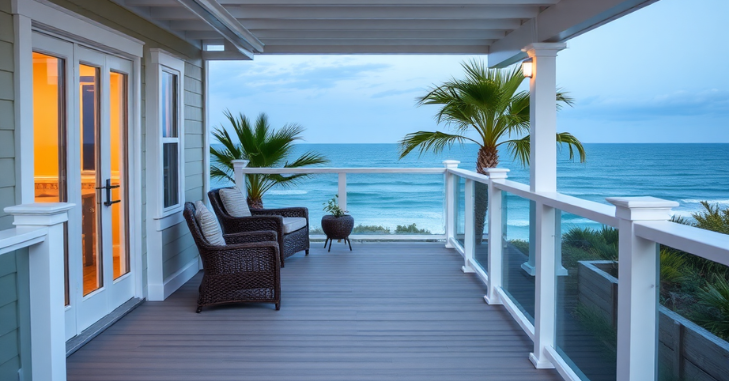
- Coastal minimal: white vinyl or composite posts with glass or cable infill to keep a water view open.
- Classic colonial: painted posts with turned spindles and decorative post caps, symmetrical and formal.
- Farmhouse: white or distressed wood with X-pattern panels between posts, sometimes paired with a stained top rail.
- Mixed materials: wood posts and top rail with round black metal balusters, one of the most affordable ways to modernize a traditional deck.
- Decorative panels: laser-cut metal panels with geometric or botanical patterns add privacy and a focal point on one section of the deck.
Code basics: height, spacing and strength
Most US towns base their residential rules on the International Residential Code (IRC), though many add local amendments. These are the points inspectors check most often:
- When a guard is required: generally where the walking surface is more than 30 inches above the ground below.
- Height: the IRC calls for at least 36 inches on residential decks, while some jurisdictions and all commercial projects require 42 inches.
- Opening size: a 4 inch sphere should not pass through any gap in the infill, protecting small children.
- Strength: the top of the guard must resist a concentrated load, commonly 200 pounds, which is why post attachment to the rim joist matters more than the look of the balusters.
- Stairs: stair guards and graspable handrails have their own rules, typically 34 to 38 inches for handrails measured from the stair nosing.
Always confirm the details with your local building department before buying materials. Many areas require a permit for new railings or a deck rebuild, and inspectors will fail a railing whose posts are fastened with only a couple of screws.
DIY or professional install?
A straight run of wood, or a kit-based composite or aluminum railing on a low, square deck, is a realistic weekend project for a confident DIYer with a drill, a miter saw and a good level. A typical sequence:
- Check local code and permit requirements, then sketch the layout with post positions (often no more than 6 feet apart, closer for cable).
- Inspect the rim joist and framing. Rotten or undersized framing must be repaired before posts go on.
- Install posts with through-bolts or engineered post brackets plus blocking, not just nails or screws.
- Fit top and bottom rails, then the infill, checking the 4 inch spacing as you go with a sphere or block.
- Add stair rails, post caps and lighting, then seal or finish if the material calls for it.
Common DIY mistakes to avoid
- Notching posts so deeply to sit them against the rim that they lose much of their strength.
- Ignoring the gap under the bottom rail, which also has to stop a 4 inch sphere on most decks.
- Mixing fastener metals, such as galvanized screws with stainless cable fittings, which can speed corrosion.
- Skipping the manufacturer’s installation guide on kit systems, which can void the warranty.
Hire a professional for high decks, glass, cable systems, curved runs and stairs with landings. Custom work costs more but allows matched trim, integrated lighting and patterns kits cannot offer.
Adding lighting
Lighting makes a deck safer after dark and changes the whole feel of the space. Popular options include LED strips tucked under the top rail, post cap lights and small recessed lights on stair risers. Solar caps are the easiest retrofit; low-voltage wired systems are brighter and more reliable but should be planned before the railing goes up so cables can run inside the posts. Warm white suits wood and rustic designs, while cooler tones suit metal and glass. Choose fittings rated for outdoor and wet locations.
Color combinations that work
- Black rail, wood deck: the most popular modern pairing; it frames the view and hides dirt.
- White rail, gray deck: a clean coastal look, though it shows grime faster.
- Stained top rail on black metal: adds warmth where hands touch the rail.
- Bronze or dark brown metal: softer than black and blends well with cedar and brick homes.
- Match the window trim: tying the railing to the house trim color makes the deck look original to the home.
Choosing for your climate
In humid, rainy areas, composite, vinyl and aluminum avoid rot and mildew. In snowy regions, a rounded or narrow top rail sheds snow better than a wide flat board, and posts should be sealed at the top to stop water getting in. In hot, sunny climates, dark metal can get very hot to the touch and some composites fade, so look for UV-stable finishes. Near the ocean, use marine-grade stainless fasteners and hardware whatever the railing material, since cheap screws are often the first thing to fail.
Budgeting tips

- Spend on the side that matters: glass or cable on the view side, simpler balusters on the sides facing neighbors.
- Design around stock lengths: kit sections usually come in 6 and 8 foot runs, so matching post spacing reduces waste.
- Price stairs separately: stair sections often cost noticeably more per foot than level runs.
- Reuse sound posts: if existing posts are solid and properly fastened, sleeving them can save money on a material upgrade.
- Get at least three quotes: and compare what each includes, such as removal of old railings, permits and post blocking.
It also pays to skip upgrades that add little value, a mistake many homeowners make indoors too, as our guide to what homeowners waste money on during kitchen and bathroom projects explains.
How to choose the right railing
Run through this checklist before you commit:
- What is the view? Worth preserving means cable or glass; nothing to see means balusters or privacy panels.
- Who uses the deck? Toddlers and pets call for tight spacing and non-climbable infill.
- How much upkeep will you really do? Be honest; if staining will not happen, skip wood.
- What does the house look like? Match the era and trim of the home.
- What does code require? Confirm height, spacing and permit rules locally before ordering.
Creative finishing ideas
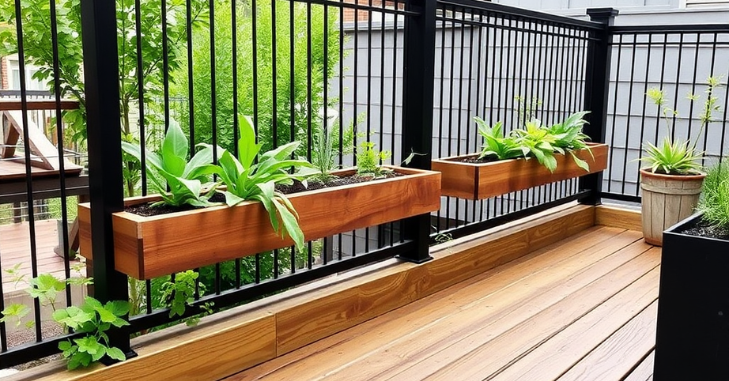
Once the structure is right, small touches make it personal. A wide drink rail along the view side turns the railing into a bar counter. Changing the infill can separate a dining zone from a lounge area. Built-in or rail-mounted planters soften hard materials; keep them light, make sure water drains away from the deck boards, and never hang heavy planters on cable or glass systems that were not designed for the load.
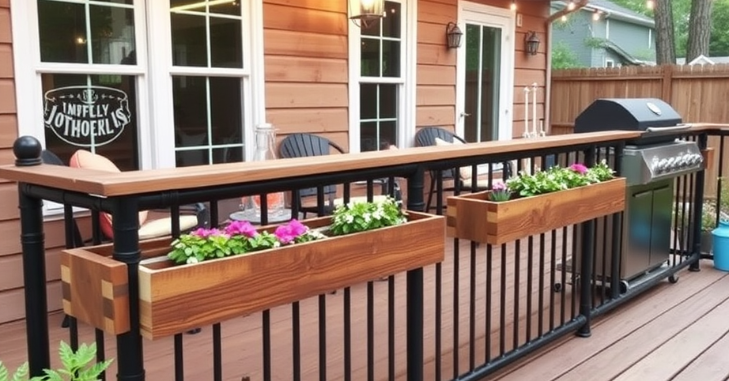
On small decks, thin posts and neutral colors make the space feel larger. On large decks with long sightlines, bolder posts and caps keep the railing looking proportionate rather than flimsy.
Frequently Asked Questions
What is the lowest maintenance deck railing?
Powder-coated aluminum, composite and vinyl need the least upkeep. They never need staining and usually only require occasional washing with mild soap and water.
How high does a deck railing need to be?
Under the IRC, residential guards are usually at least 36 inches high where the deck is more than 30 inches above grade. Some areas require 42 inches, so check your local code.
Are glass railings safe for children?
Properly installed tempered or laminated safety glass is strong and has no gaps to slip through or climb. Installation should follow the manufacturer’s engineering and local code.
Can I mix materials on one deck railing?
Yes. Wood posts with metal balusters, or black aluminum with a stained wood top rail, are common and cost-effective combinations that look intentional.
What is the cheapest deck railing option?
Pressure-treated wood is usually the cheapest to buy and install. Remember to factor in staining every few years, which narrows the gap with low-maintenance materials over time.
Do I need a permit to replace deck railings?
Often yes, especially for new decks or full railing replacements. Rules vary by town, so ask your local building department before you start.
Bottom Line on Deck Railing Ideas
Pick the material for your climate and maintenance tolerance, the style for your house and view, and then make sure posts are properly attached and spacing meets code. A well-built railing in simple materials will outlast and outperform an expensive one that is poorly fastened, so put the effort into the structure first and the decorative touches second.