

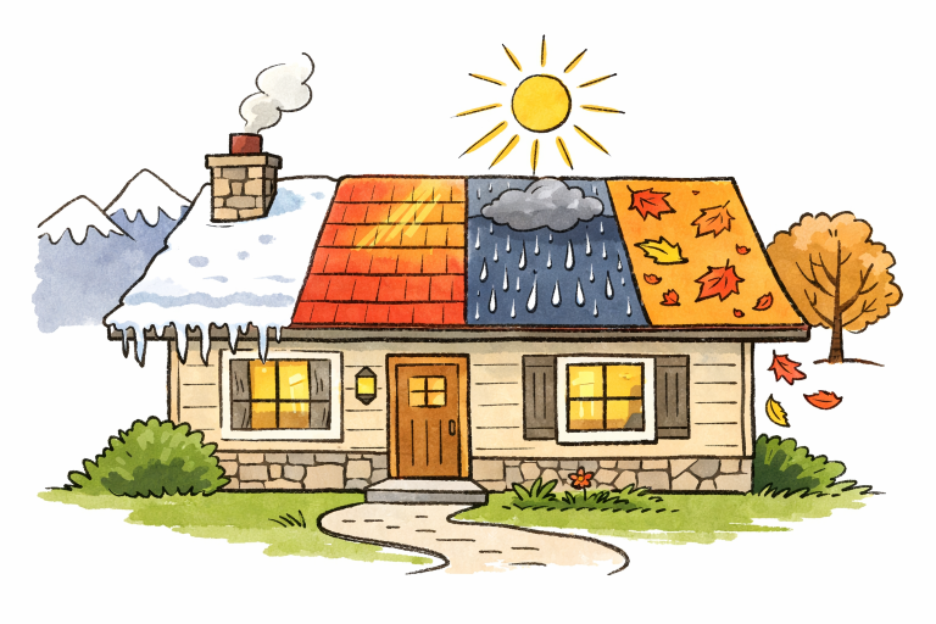
Protecting your new roof from Utah’s harsh climate comes down to four things working together: materials suited to snow, sun and wind; installation details such as ice-and-water shield, balanced ventilation and wind-rated nailing; an airtight, well-insulated attic that keeps heat off the roof deck; and a short inspection routine every spring and fall. Get those right and a new roof should reach the full lifespan its warranty promises.
Utah is tougher on roofs than its dry reputation suggests. Mountain and bench communities get deep snow and ice dams, the whole state sits at high altitude with intense UV, canyon winds hit the Wasatch Front hard, and valley towns swing above and below freezing dozens of times each winter. This guide explains how each of those stresses damages a roof and what you can do about it in the first months and years after installation.
Why a New Roof Still Needs Protection
A new roof is at its strongest on day one, but it is also when small installation choices start to matter. A missed section of ice barrier, a blocked soffit vent or a nailing pattern that does not match the wind exposure will not show up in the first summer. They show up in the second or third winter as an ice dam, a lifted ridge cap or a stain on the ceiling.
The first year is also when warranty paperwork, inspection records and photos should be organized. Most manufacturer warranties depend on correct installation and reasonable maintenance, so a simple record of what was installed and how you have looked after it protects your investment as much as any product does.
If you are still planning a new roof installation Utah homeowners can trust, choose your contractor carefully. Local firms such as Ron Case Roofing and Asphalt Paving work with Utah’s conditions every season, and that experience shows in details like eave protection, ventilation and flashing that decide how long a roof actually lasts.
How Utah’s Climate Wears Down a Roof
| Climate stress | Where it is worst | What it does to a roof |
|---|---|---|
| Heavy snow | Mountain towns and higher benches such as Park City, Heber and the upper Cottonwood areas | Adds structural load, slides off and tears gutters, feeds ice dams |
| Freeze-thaw cycles | Most valley communities through winter and early spring | Water in small gaps freezes, expands and widens cracks and seams |
| High-altitude UV | Statewide, especially southern Utah | Dries out asphalt, loosens granules, cracks sealant and rubber pipe boots |
| Summer heat | St. George and southern Utah, plus hot Wasatch Front summers | Raises attic temperatures and speeds up shingle aging |
| Strong winds | Canyon mouths and the east benches, including Davis County | Lifts shingle edges and ridge caps, drives rain and snow under laps |
| Hail and summer storms | Periodic, varies by year and location | Bruises shingles, dents metal, knocks off protective granules |
Freeze-thaw cycles deserve special attention. The same process that breaks up roads each spring works on your roof: water seeps into a tiny gap, freezes overnight and expands, then thaws and runs a little deeper the next afternoon. Repeat that through a long Utah winter and a hairline crack in flashing sealant, or a shingle tab that never fully sealed down, becomes a path for water into the deck.
UV is the slower threat. At Utah’s elevation the sun breaks down the oils in asphalt shingles and the rubber in plumbing vent boots faster than at sea level. You will often see it first as granules collecting at the bottom of downspouts and fine cracks in the collars around vent pipes, usually on south- and west-facing slopes.
Choosing Materials for Utah Conditions
| Material | Typical lifespan (well installed) | Strengths in Utah | Watch-outs |
|---|---|---|---|
| Architectural asphalt shingles | Roughly 20 to 30 years | Affordable, widely available, good wind ratings on premium lines | UV aging; consider impact-resistant (Class 4) versions in hail-prone areas |
| Standing-seam metal | Often 40 years or more | Sheds snow, resists wind and fire, reflects summer heat | Needs snow guards above doors, decks and walkways; higher upfront cost |
| Concrete or clay tile | Often 50 years or more | Very durable and heat tolerant, popular in southern Utah | Heavy, so framing must be checked; tiles can crack under foot traffic or in freeze-thaw |
| Synthetic shake or slate | Varies by product | Natural look with lower weight, often impact rated | Quality varies; check warranty terms and local installer experience |
These lifespans are general ranges, not guarantees. Real-world life depends on installation, ventilation, roof pitch, sun exposure and maintenance. A south-facing low-slope section in St. George will age differently from a steep north slope in Ogden even with the same product.
Matching material to where you live
- Wasatch Front valleys: architectural or impact-rated shingles are the common choice, with extra attention to ice barrier on north eaves and wind nailing near canyon mouths.
- Mountain and high-snow areas: standing-seam metal with snow guards is popular because it sheds snow cleanly; confirm the structure is designed for local snow loads.
- Southern Utah: tile and light-colored or reflective products help manage heat; UV-resistant underlayment and quality pipe boots are worth paying for.
- Hail-prone neighborhoods: Class 4 impact-rated shingles cost more but may reduce damage, and some insurers offer discounts for them, so ask your agent before you buy.
Installation Details That Matter Most
Ice-and-water shield
This self-adhering membrane goes under the roofing at the eaves, in valleys and around chimneys, skylights and vents. In cold climates, residential codes generally require an ice barrier at the eaves that extends inside the exterior wall line. Many Utah contractors run it further on low-slope sections and shaded north eaves where ice lingers longest. Ask your installer exactly where it went and photograph it before the shingles cover it.
Balanced ventilation
Intake vents at the soffits and exhaust at or near the ridge keep the roof deck closer to outdoor temperature. In winter that limits the snowmelt that feeds ice dams; in summer it vents heat that bakes shingles from below. The key word is balanced: mixing different exhaust types, such as a ridge vent plus a powered fan, can short-circuit airflow and pull air from the wrong place.
Wind-rated fastening
In windy areas, ask about high-wind nailing patterns (often six nails per shingle), starter strips with sealant along eaves and rakes, and wind-rated ridge caps. Nails placed too high or overdriven are one of the most common reasons shingles blow off, and they can void the wind warranty.
Flashing and drip edge
Step and counter flashing at walls and chimneys, kick-out flashing where a roof edge meets a wall, and drip edge along the eaves direct meltwater away from the deck and fascia. Sealant should back up proper metal flashing, never replace it; caulk alone will crack under UV and freeze-thaw within a few seasons.
Structure and snow load
Design snow loads vary widely by elevation and are set by local building departments. If you are switching to heavier tile or live in a high-snow area, your contractor should confirm the framing can carry the load and pull the required permits. A permit also creates a record that the work was inspected, which helps if you sell the home.
Good contractors also plan the job so your yard, landscaping and driveway are protected while the old roof comes off. Our guide to how an experienced roofer minimizes disruption explains what to expect during tear-off and cleanup.
How to Prevent Ice Dams
Ice dams form when heat escaping from the living space melts snow on the upper roof. The meltwater runs down to the cold eaves, refreezes, and builds a ridge of ice that traps more water behind it. That water then backs up under the shingles, where it can soak the deck, insulation and ceiling. To prevent them:
- Seal attic air leaks around light fixtures, bath fans, attic hatches, chimneys and plumbing chases. This is usually the single biggest fix.
- Add attic insulation to the level recommended for your climate zone, keeping it even across the whole ceiling.
- Keep soffit vents clear by installing baffles so insulation cannot block intake airflow.
- Route bath and kitchen fans outdoors, not into the attic, so warm moist air does not reach the underside of the deck.
- Rely on ice-and-water shield at eaves and valleys as a backup, not the first line of defense.
- Remove heavy snow carefully from the lower few feet of the roof with a roof rake from the ground. Never chip ice with a hammer or shovel, which tears shingles.
Heat cables can help on a stubborn eave but treat the symptom rather than the cause. Sealing and insulating the attic also lowers heating bills, using the same heat-loss principles that apply to glazing; see how windows perform thermally for how those principles work around the rest of the house.
Seasonal Roof Maintenance Calendar
| Season | Tasks |
|---|---|
| Spring | Inspect for winter damage: lifted or missing shingles, damaged flashing, gutters bent by snow slides and stains in the attic. Clean gutters and downspouts. |
| Summer | Check pipe boots and sealant for UV cracking, look for hail damage after storms and confirm attic vents are open and unobstructed. |
| Fall | Clean gutters after leaves drop, trim overhanging branches, check ice-prone eaves and test that downspouts drain away from the foundation. |
| Winter | Watch for large icicles and ice ridges, rake heavy snow from lower edges and check the attic for frost or drips during cold snaps. |
Have a professional inspection at least once a year, ideally in spring or fall, and after any major hail or wind event. A roofer on the roof can spot granule loss, loose fasteners, popped nails and failing flashing that are hard to see from the ground. Ask for photos of anything they flag so you have a dated record.
What you can safely check yourself
- Scan each slope from the ground with binoculars for missing, curled or creased shingles.
- Look into gutters for heavy granule buildup, a sign of UV or hail wear.
- Check the attic with a flashlight for stains, damp insulation, mold spots or frost on nail tips.
- Walk the perimeter after storms for shingle pieces, bent drip edge or detached gutters.
- Leave anything that requires climbing to a professional, especially on steep, icy or tile roofs.
Warning Signs That Need Prompt Attention
- Water stains on ceilings or damp insulation in the attic, especially after a thaw
- Large icicles or thick ice ridges along the eaves
- Shingles that are curling, cracked, missing or shedding lots of granules into gutters
- Gutters pulling away from the fascia after snow slides
- Frost on nail tips in the attic during cold weather, a sign that warm, moist air is reaching the deck
- Daylight visible through the roof boards
Fixing these early is almost always cheaper than replacing water-damaged decking, drywall and insulation later. Document storm damage with dated photos and contact your insurer promptly, since most policies expect timely reporting of hail and wind claims.
Choosing a Utah Roofing Contractor
- Confirm the contractor is licensed with the Utah Division of Professional Licensing (DOPL) for roofing work and carries liability and workers’ compensation insurance.
- Ask how they handle ice-and-water shield, ventilation and wind nailing for your specific neighborhood and exposure.
- Get written estimates that list the shingle line, underlayment, flashing, ventilation, decking repairs and disposal.
- Ask about both the manufacturer warranty and the contractor’s own workmanship warranty, and get both in writing.
- Check whether they will register the manufacturer warranty for you and provide photos of the underlayment before it is covered.
- Be cautious with storm-chasing crews who appear after hail, ask for large cash deposits or push you to sign on the spot.
Common mistakes homeowners make
- Choosing purely on price and skipping questions about ventilation and ice barrier.
- Adding a new roof without addressing attic air leaks, so ice dams return the first heavy winter.
- Pressure washing shingles, which strips granules.
- Ignoring small leaks until spring, giving freeze-thaw a full season to spread the damage.
Freeze-thaw damage does not stop at the roofline. Driveways and walkways go through the same cycles every winter, so if you are budgeting for exterior upkeep, it is worth reading about the benefits of sealcoating asphalt surfaces at the same time.
Frequently Asked Questions
What is the best roofing material for Utah?
There is no single best material for the whole state. Architectural asphalt shingles give good value along the Wasatch Front, standing-seam metal sheds snow well in mountain towns, and tile copes with heat in southern Utah. Installation quality usually matters as much as the material itself.
How do I stop ice dams on a new roof?
Seal air leaks into the attic, bring insulation up to the recommended level, keep soffit vents open with baffles and make sure ice-and-water shield runs along the eaves. During heavy snow, rake the lower few feet of the roof from the ground rather than climbing up.
How often should a Utah roof be inspected?
Do a visual check from the ground each spring and fall and look in the attic during cold snaps. Book a professional inspection about once a year and again after any major hail or wind storm, since early repairs are far cheaper than water damage.
How long does a new roof last in Utah?
Well-installed architectural asphalt shingles commonly last around 20 to 30 years, standing-seam metal often 40 years or more and tile longer still. Ventilation, sun exposure, roof pitch and maintenance can push a roof toward either end of those ranges.
Do freeze-thaw cycles really damage roofs?
Yes. Water that gets into small gaps freezes overnight, expands and widens the gap, then seeps deeper on the next thaw. Over a winter this turns hairline cracks in sealant, flashing and shingles into leak paths.
Should I remove snow from my roof in Utah?
Most roofs built to local code can carry normal snow loads, so full removal is rarely needed. Clearing the lower edge with a roof rake helps prevent ice dams, and very deep or drifted snow on older or low-slope roofs is a job for a professional crew.
Bottom Line on Protecting Your New Roof
A new roof in Utah lasts longest when the attic is sealed and ventilated, the eaves and valleys are protected with ice barrier, the shingles are fastened for your wind exposure, and someone looks at it every spring and fall. Keep your installation photos and warranty documents together, deal with small problems before winter, and your roof should give you the full service life you paid for.