


Paper window shades are cheap, pleated accordion-style shades made from heavy paper that stick to the top of a window frame with an adhesive strip and are raised with clips instead of cords. They usually cost under $20 per window, install in minutes without tools and can be trimmed to fit, which makes them ideal for renters, new homeowners and anyone who needs privacy fast.
They are not a permanent solution, though. Paper fades, tears and dislikes moisture, and the clips make daily adjustment fiddly. Below you’ll find the main types, an honest look at the pros and cons, a cost comparison with other budget options, measuring and installation steps, and signs it is time to upgrade.
How paper window shades work
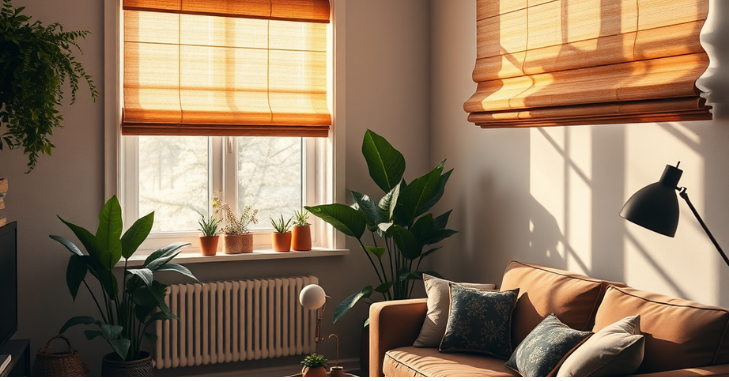
A typical paper shade arrives folded in a narrow stack. You peel the backing from the adhesive strip on the top rail, press it to the inside or outside of the window frame and let the pleats drop. To raise the shade, fold the pleats up to the height you want and hold them with one or two plastic clips. The basic version has no cords, headrail or brackets.
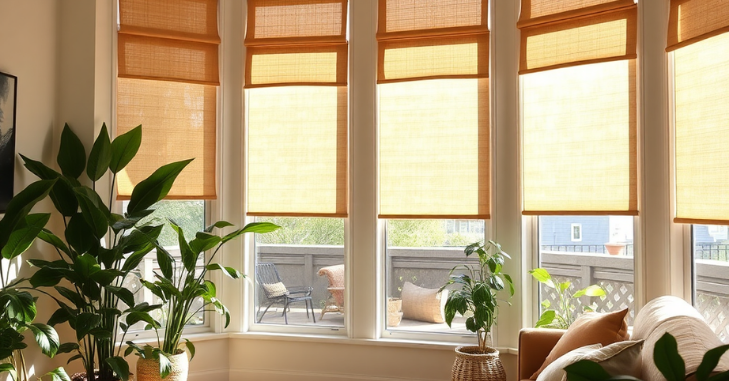
Because the pleats are paper, they filter light rather than blocking it completely, unless you buy a blackout version with a laminated backing. The result is a soft, even glow that hides silhouettes in daytime, much like a light-filtering fabric shade. At night, with lights on inside, a thin light-filtering shade can still show shapes, so bedrooms and street-facing rooms usually need a thicker grade.
Types of paper window shades
| Type | What it is | Best for |
|---|---|---|
| Light-filtering pleated | Standard white or off-white paper pleats with an adhesive top | Living rooms, kitchens, quick privacy in rentals |
| Room-darkening and blackout | Thicker paper or paper with a light-blocking backing | Bedrooms, nurseries, media rooms, shift workers |
| Textured or rice-paper look | Crinkled or fibrous finish for a softer, natural look | Minimalist, Japandi and Scandinavian interiors |
| Top-down or bottom-up versions | Lets the shade open from the top for privacy with daylight above | Bathrooms and street-facing rooms |
| Bamboo or natural-fiber hybrids | Paper combined with natural fibers or woven textures | Rustic, coastal or bohemian styles |
You may also see cellular or honeycomb shades sold nearby. Those are usually made of spunlace or polyester fabric, not paper, and they cost more. Their air-trapping cells insulate much better, so they are a step up rather than a like-for-like alternative.
Where paper shades work best, room by room
- Bedrooms: choose a room-darkening or blackout version, mounted outside the frame to cut light leaking around the edges.
- Living rooms and home offices: light-filtering pleats reduce screen glare while keeping the room bright.
- Kitchens: fine away from the stove and sink; grease and steam shorten their life.
- Bathrooms: only moisture-resistant or top-down models, and not on windows that regularly fog up.
- Home staging and move-ins: an inexpensive way to make empty rooms look finished and get privacy on day one.
- Sidelights and small windows: narrow widths trim easily, making them handy for odd sizes that stock blinds do not cover.
Pros and cons
Advantages
- Low cost: usually a small fraction of the price of custom blinds, often under $20 per window for standard sizes.
- No tools or drilling: ideal where a lease forbids holes in the frame.
- Cordless: no dangling cords, which removes a known strangulation hazard for young children and pets.
- Trim to fit: most can be cut to width with scissors or a sharp blade.
- Clean, minimal look: slim pleats suit modern interiors and do not crowd small rooms.
Drawbacks
- Durability: paper can tear, crease, fade or yellow in strong sun over time, especially on south- and west-facing windows.
- Moisture: standard paper shades do not suit steamy bathrooms or windows prone to condensation unless labeled moisture-resistant.
- Adhesive issues: the strip can let go in heat, or pull paint off when removed.
- Limited insulation: a single paper layer adds a little buffer but nothing like a cellular shade or lined drapes.
- Manual operation: clip-based raising is fine for occasional use but tedious if you open and close a shade several times a day.
Paper shades compared with other budget window treatments
| Option | Typical cost range | Install | Light control | Lifespan |
|---|---|---|---|---|
| Paper pleated shades | Lowest; often under $20 per window | Adhesive, minutes | Filtering or blackout, not finely adjustable | Months to a few years |
| Vinyl mini blinds | Low | Brackets and screws | Tilt slats for fine control | Several years |
| Fabric roller shades | Moderate | Brackets and screws | Smooth, many opacities | Many years |
| Cellular (honeycomb) shades | Moderate to high | Brackets and screws | Filtering or blackout, good insulation | Many years |
| Curtains and drapes | Varies widely | Rod and brackets | Depends on lining | Many years |
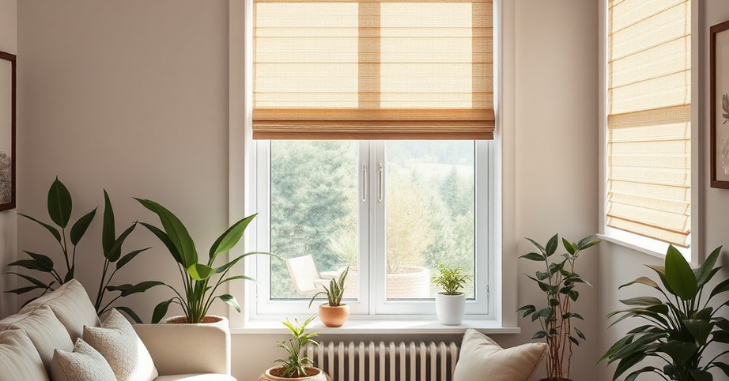
Prices vary by size, brand and retailer, so check current listings. The broad pattern holds: paper shades win on upfront cost and speed, while hard-mounted treatments win on durability and day-to-day convenience.
How to choose the right paper shade
Run through this checklist before you buy:
- Opacity: light-filtering for living areas, room-darkening or blackout for bedrooms and media rooms.
- Size: buy a width equal to or slightly larger than your window, never narrower, and plan to trim.
- Sun exposure: for hot, sunny windows, choose a thicker or backed shade and expect to replace it sooner.
- Humidity: in bathrooms and laundry rooms, look for packaging that says moisture-resistant.
- Paint and frame finish: on fresh or delicate paint, plan to mount over painter’s tape.
- Look: smooth white pleats read modern and neutral; textured or rice-paper styles add warmth.
- Quantity: multi-packs usually cost less per window if you are covering a whole home.
How to measure for paper shades
- Decide on inside or outside mount. Inside mount sits within the window recess for a neat look; outside mount covers the frame and blocks more light at the edges.
- Measure width at the top, middle and bottom. For inside mount, use the narrowest measurement. For outside mount, add a little on each side for better coverage.
- Measure height. Many paper shades come in a standard drop of around 72 inches. If yours is longer than the window, the extra pleats simply stack at the bottom or can be trimmed.
- Buy the next size up and trim, rather than buying a shade that is too narrow.
Step-by-step installation
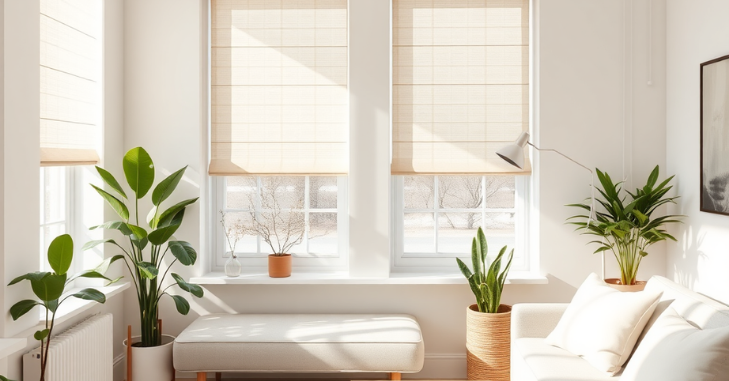
- Trim if needed. With the shade still folded, mark the width and cut evenly from both sides with a sharp utility knife or fine-tooth saw so the pattern stays centered. Many brands print trimming guides on the packaging.
- Clean the mounting surface. Wipe the frame with a little rubbing alcohol and let it dry. Dust and grease are the main reason adhesive strips fail.
- Protect the paint. On delicate or freshly painted surfaces, apply painter’s tape first and stick the shade to the tape, which makes removal easier later.
- Stick the top rail. Peel the backing a few inches at a time, align the shade level and press firmly along its whole length for about 30 seconds.
- Let it cure. Wait before raising and lowering, ideally a few hours, so the adhesive bonds fully.
- Attach clips to hold the shade at your preferred height.
Common mistakes to avoid
- Cutting from one side only: the shade ends up off-center and uneven.
- Skipping the cleaning step: adhesive on a dusty frame often peels within days.
- Installing in direct heat: sticking a shade to a sun-baked frame can soften the adhesive before it bonds; install in the cooler part of the day.
- Pulling the pleats down hard: lower the shade by hand rather than tugging the bottom rail, which strains the adhesive.
- Using a light-filtering shade in a bedroom: it will not darken the room enough for most sleepers.
Energy, sun and safety considerations
Any covering that blocks direct sun reduces glare and summer heat gain a little, and slows the fading of floors and furniture. For real energy savings, though, the window itself matters more than a paper shade. Our guide to the thermal performance of windows explains U-factor, solar heat gain and why insulated shades or upgraded glazing make a bigger difference.
On safety, the cordless design is a genuine plus. Corded window coverings have long been linked to child strangulation incidents, and US voluntary industry standards now require stock window coverings sold in stores and online to be cordless or have inaccessible cords. Paper shades avoid the issue entirely, though you should still keep the small clips out of reach of young children.
Care, removal and recycling
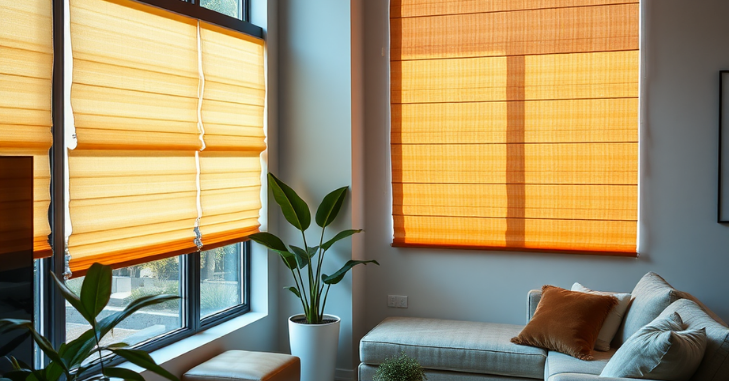
- Dust with a soft brush or a vacuum on low with a brush attachment. Avoid water and cleaning sprays.
- To remove, warm the adhesive with a hair dryer on low and peel slowly at a sharp angle. Leftover residue usually comes off with a citrus-based adhesive remover.
- Check local recycling rules before disposal. Plain paper pleats may be recyclable once the adhesive strip and clips are removed, but laminated blackout versions often are not.
When to upgrade to permanent window treatments
Paper shades are a smart stopgap, but consider something more permanent if you are staying in a home long term, need precise light control, want better insulation, or have unusually large or shaped windows. A professional installer can measure, recommend materials and handle motorization. If you are in central Florida, our roundup of the best window treatment companies in Ocala, FL is a useful starting point.
Bottom Line
Paper window shades are the fastest, cheapest way to get privacy and softer light, especially in rentals or a new home. Pick the right opacity, clean the frame before mounting and trim evenly, then plan to replace them with roller, cellular or custom treatments once you want lasting durability and finer control.
Frequently Asked Questions
How long do paper window shades last?
It depends on sun exposure and handling. In a shaded window they can last years; in strong direct sun they may fade, yellow or become brittle much sooner.
Can you cut paper window shades to size?
Yes. Most can be trimmed to width with a sharp knife or fine-tooth saw while still folded. Cut evenly from both sides to keep the shade centered.
Do paper shades damage paint when removed?
They can. Warm the adhesive with a hair dryer and peel slowly, or mount the shade onto painter’s tape in the first place to reduce the risk.
Are paper window shades blackout?
Standard ones only filter light. Blackout versions with thicker paper or a backing block much more light, though some usually leaks around the edges, especially with an inside mount.
Are paper shades safe for homes with children?
They are cordless, which removes the strangulation risk linked to corded blinds. Keep the small plastic clips out of reach of young children.
Can you reuse paper shades after removing them?
Usually not with the original strip, which loses its grip once peeled. Some people reattach them with removable double-sided mounting tape, but results vary.