

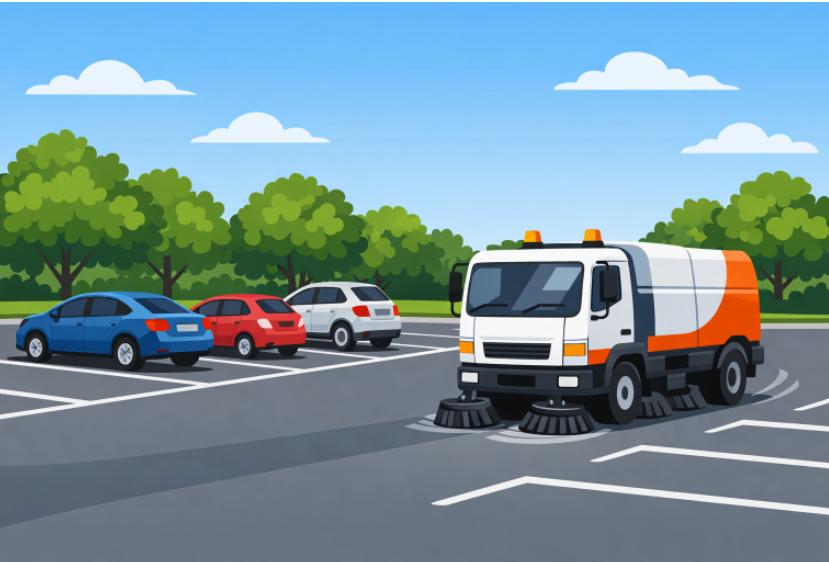
Parking lot sweeping matters for Washington businesses because the lot is the first part of your property customers see, the place where many slip, trip and vehicle damage claims begin, and a direct route for litter, sediment and oil to reach storm drains. A consistent sweeping schedule protects your reputation, lowers liability, extends the life of your asphalt and supports stormwater compliance.
This guide explains why the Pacific Northwest climate makes sweeping more important than in drier regions, how often different properties should be swept, what a professional crew actually does on a visit, how pricing is usually structured and what to ask before you sign a contract.
Why a Clean Parking Lot Affects Business Success
Customers judge a business before they reach the front door. A lot scattered with cigarette butts, fast food wrappers, broken glass or drifts of fir needles suggests a company that overlooks details, and many visitors quietly assume the interior will match. A clean, clearly striped lot sends the opposite message: the owner cares, the site is safe and the business is run well. For companies in the Pacific Northwest, specialized parking lot sweeping services Washington can make all the difference in sustaining that positive first impression week after week, not just after an occasional cleanup.
The effect reaches well beyond shoppers. Employees walk the lot twice a day, tenants compare your property with competing buildings when their lease comes up, and delivery drivers notice whether loading areas are usable. For landlords and property managers, a well-kept exterior supports tenant retention and helps the property present well when it is appraised, refinanced or marketed for sale.
Signs your lot is hurting first impressions
- Litter collecting along curbs, fence lines and landscaped islands
- Leaves or needles piling up in corners and under overhanging trees
- Dark oil stains and grit that make striping look faded
- Overflowing exterior trash cans or cart corrals
- Sand and gravel left over from winter weather still visible in spring
How Regular Sweeping Improves Safety and Reduces Liability
Washington’s long wet season makes ordinary debris more hazardous. Soaked leaves and pine needles become slick underfoot, moss creeps in from shaded edges, and sand or gravel left from winter traction treatments rolls like ball bearings under a shoe. Loose screws, nails and glass fragments puncture tires and can lead to complaints from customers who blame the property for the damage. Regular sweeping removes these hazards before they turn into incidents.
Property owners generally have a duty to keep premises reasonably safe for visitors. A documented maintenance program, including sweeping logs that record dates, times and areas covered, shows that you take that duty seriously. Records do not eliminate liability, but they give your insurer and your attorney something concrete if a claim is ever made. Ask your contractor to provide a service report after each visit and keep those reports for at least as long as your insurer recommends. For specific questions about premises liability, speak with your insurance broker or a local attorney.
Can Sweeping Extend Pavement Life?
Yes. Asphalt mainly fails through water intrusion and oxidation. When wet debris sits in low spots and along curbs, it keeps the surface damp, feeds moss and weeds, and lets water work into small cracks. East of the Cascades, where freeze-thaw cycles are more common, trapped water expands as it freezes and widens those cracks further. Fine grit ground in by tires also acts like sandpaper on the surface and on painted striping.
Sweeping will not repair damage that already exists, but it keeps the pavement clean and dry so problems are visible early and repairs bond properly. Crack sealing and seal coating both need a clean surface to adhere, which is why sweeping is usually the first step before either treatment. Our guide to sealcoating and protecting asphalt surfaces explains how the two work together to delay expensive resurfacing.
A simple pavement care sequence
- Sweep on a recurring schedule so debris never sits for long.
- Walk the lot quarterly and note new cracks, potholes and drainage problems.
- Seal cracks before the wet season so water cannot get under the surface.
- Sealcoat on the schedule your paving contractor recommends, after a thorough sweep.
- Restripe when lines fade so traffic flow and accessible spaces stay clear.
Stormwater and Environmental Compliance in Washington
Rain carries whatever sits on your lot into catch basins, and in many areas those drains lead to creeks, lakes and Puget Sound rather than to a treatment plant. Oil drips, brake dust, tire particles, sediment and litter all travel with that runoff. Washington’s Department of Ecology oversees stormwater permits, and cities and counties covered by municipal stormwater permits often expect private property owners to maintain their drainage systems and keep pollutants out of them.
Requirements vary by city, property type and whether your site holds its own permit, so check with your local stormwater utility before assuming what applies to you. In practice, regular sweeping with equipment that captures fine particles, paired with periodic catch basin cleaning, is one of the most straightforward ways to reduce what leaves your site. It also gives you a documented maintenance plan to show an inspector if they visit.
How Often Should Parking Lots Be Swept?
Frequency depends on traffic volume, surroundings and season. The table below gives typical starting points; a good provider will adjust them after walking your site and seeing where debris actually collects.
| Property type | Typical frequency | What drives it |
|---|---|---|
| Retail centers, grocery stores, fast food | 2 to 7 times per week | High litter, food waste and shopping cart traffic |
| Hospitals and medical campuses | Several times per week | Accessibility, patient safety and constant use |
| Apartment and HOA lots | Weekly | Resident litter; more in autumn under trees |
| Office parks | Weekly to every two weeks | Lower litter, steady vehicle use |
| Industrial and warehouse yards | Weekly to monthly | Heavy grit from trucks, possible permit conditions |
| Churches, schools and event venues | Before and after peak use | Traffic arrives in bursts rather than daily |
In western Washington, plan extra visits from October through December when leaf fall peaks, and schedule a thorough spring cleanup to remove winter sand and gravel. Lots next to construction sites, unpaved shoulders or busy roads may need more frequent service all year because dirt is tracked in constantly.
Seasonal checklist for Washington lots
- Autumn: increase frequency, clear leaves from catch basin grates and gutters before heavy rain.
- Winter: sweep after storms to remove branches and debris; coordinate with any snow or de-icing contractor.
- Spring: remove leftover traction sand, inspect for new cracks and potholes, plan sealing or striping.
- Summer: focus on dust control and litter, and book pavement work during dry weather.
What a Professional Sweeping Service Includes
- Mechanical or regenerative air sweepers: mechanical brooms handle heavy debris, while regenerative air trucks lift fine dust and sediment that brooms leave behind.
- Backpack blowers and hand work: for corners, sidewalks, curbs, stairwells and around cart corrals where trucks cannot reach.
- Litter pickup: landscaped islands and planter beds are often included in the scope.
- Trash can service: emptying and relining exterior bins so overflow does not blow back across the lot.
- Add-ons: pressure washing, catch basin cleaning, line striping and minor repairs.
- Reporting: service logs and photos of issues such as potholes, damaged signs, burned-out lights or illegal dumping.
Most sweeping happens at night or early in the morning, when the lot is empty and crews can reach every space without disrupting customers. Confirm that the provider hauls collected debris away and disposes of it properly rather than tipping it into the dumpsters you pay to have emptied.
Mechanical vs Regenerative Air Sweepers
| Feature | Mechanical broom sweeper | Regenerative air sweeper |
|---|---|---|
| Best at | Heavy, bulky debris such as gravel and packed dirt | Fine dust, sediment and light litter |
| Typical sites | Construction-adjacent and industrial yards | Retail, office and stormwater-sensitive sites |
| Dust control | Relies on water spray | Captures fine particles in the hopper |
| Common approach | Often paired with air units on mixed sites | Often the default for routine commercial lots |
Many contractors run both types and choose based on the site. If stormwater quality matters for your property, ask specifically how the equipment handles fine particles, since those carry much of the oil and metal residue.
Cost of Regular Parking Lot Sweeping
Pricing is usually quoted per visit or as a monthly contract, based on lot size, frequency, debris level and any extras. Hourly truck rates are common for larger or irregular sites. Recurring contracts almost always cost less per visit than one-off cleanups because the crew is not starting from scratch each time. Rather than comparing only the headline price, look at what is included, how quickly the provider responds to extra requests and whether reports come with each visit.
Weigh that cost against the alternatives. Premature repaving, damaged customer vehicles, a single injury claim or a stormwater violation can easily exceed years of sweeping fees. Clean lots also attract fewer pests, since food waste draws rodents and birds. If rodents are already a problem, our breakdown of what a rat exterminator costs shows why prevention through regular cleanup is usually cheaper.
Questions to ask when comparing quotes
- Is the price per visit, per month or per hour, and what triggers extra charges?
- Are sidewalks, landscaped islands and trash cans included?
- How are storm cleanups and emergency callouts billed?
- Is there a minimum contract term or a cancellation notice period?
How to Choose a Sweeping Provider in Washington
- Ask for a site walk and a written scope listing areas, frequency and add-ons.
- Confirm the business is licensed and insured, and request certificates of insurance.
- Ask what equipment they use and whether it captures fine particles.
- Check how they document each visit and report property issues.
- Ask about seasonal adjustments and emergency callouts after storms.
- Request references from similar properties in your area.
Springtime Enterprises LLC is one Washington provider that builds custom sweeping plans around each property’s traffic and debris levels, with scheduled visits and add-on services. Whichever company you choose, the principle is the same: consistency matters more than an occasional deep clean. The same standard applies to the rest of your exterior, and our advice on choosing a glass company for a commercial building covers how clean, well-maintained storefronts complete the picture.
Common mistakes property managers make
- Choosing the cheapest bid without checking what the scope actually covers
- Keeping the same frequency all year instead of adding autumn visits
- Ignoring catch basins until they back up during a storm
- Not asking for service logs, then having no records when a claim arrives
Frequently Asked Questions
What types of businesses benefit from parking lot sweeping?
Any property with a parking area benefits, including retail centers, offices, hospitals, schools, churches, apartment communities and industrial sites. Consistent sweeping keeps the space welcoming and safer for visitors and staff.
Does parking lot sweeping help with pest control?
Yes. Removing trash, food remnants and organic debris cuts off food and nesting material for pests such as rodents and insects. That lowers the chance of infestations and of damage to wiring in parked cars.
Is parking lot sweeping environmentally friendly?
Professional sweeping with dust control and proper disposal keeps sediment, litter and pollutants out of storm drains. That supports clean water goals and local stormwater requirements in Washington.
When is the best time of day to sweep a parking lot?
Most commercial lots are swept at night or very early in the morning when they are empty. Crews can then cover every space safely without disturbing customers or staff.
How often should a lot be swept in autumn?
Many Washington properties increase frequency from October through December, when leaf and needle fall peaks. Lots with overhanging trees may need weekly or more frequent visits during that period, especially before heavy rain.
Bottom Line
Treat parking lot sweeping as routine maintenance, not an occasional chore. Set a frequency that matches your traffic, add visits in autumn, ask for service logs and pair sweeping with crack sealing and catch basin care. That combination keeps your lot safer, your pavement lasting longer and your property presenting well to every customer who pulls in.