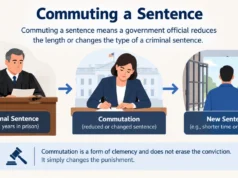


Wisconsin family courts use statewide percentage rules, but the final amount can change based on placement, income, and special circumstances.
Short answer: Wisconsin child support starts with gross income, the number of children, and court-ordered placement. The basic rates range from 17% for one child to 34% for five or more children. Shared placement, income level, and other family obligations can change the final amount.
| Key factor | Wisconsin rule |
| One child | 17% of income under the basic standard |
| Two children | 25% |
| Three children | 29% |
| Four children | 31% |
| Five or more children | 34% |
| Shared placement | Each parent has at least 25% placement, or 92 days per year |
| Order review | Available after three years in qualifying cases, or sooner after a substantial change |
| Usual end point | Age 18, or age 19 while the child remains in qualifying secondary education |
The percentages are starting points rather than guaranteed final amounts. Wisconsin has separate methods for shared placement, split placement, serial-family cases, and certain income levels.
How Wisconsin Child Support Is Calculated

Wisconsin courts consider several factors when setting a support amount. These can include each parent’s income, earning capacity, placement time, and responsibility for other children.
Standard percentage rates
For a basic case, Wisconsin’s percentage standard applies the following rates to the paying parent’s income:
- 17% for one child
- 25% for two children
- 29% for three children
- 31% for four children
- 34% for five or more children
For example, assume a parent’s applicable monthly income is $4,000, and the order covers one child. Seventeen percent of $4,000 is $680. This provides a basic illustration, not a prediction of what a judge will order.
Placement arrangements or another applicable guideline can change that amount.
Shared placement uses a different formula
The shared-placement formula generally applies when both parents have court-ordered placement for at least 25% of the year. Wisconsin treats 92 days per year as the 25% threshold.
For example, consider a family with two children. Parent A earns $2,000 per month, while Parent B earns $3,000 per month. Their placement time is divided 40% and 60%. After applying the shared-placement formula, the resulting support obligation may differ substantially from the amount produced by applying a simple percentage to one parent’s income.
That example shows why applying a percentage to only one parent’s paycheck can produce an inaccurate estimate in a shared-placement case.
For more plain-language legal resources, browse Webdorbit’s Law section.
What Income Counts Under the Guidelines?
Wisconsin generally starts with gross income rather than take-home pay. Gross income can include more than a regular salary.
Income may include:
- wages, salaries, and tips;
- commissions and bonuses;
- interest and capital gains;
- unemployment compensation;
- certain workers’ compensation payments;
- Social Security disability income; and
- some retirement, military, and veterans’ benefits.
Certain types of money may be excluded from gross income for child support purposes. Examples can include support received for another child, Supplemental Security Income, and some forms of public assistance.
A court may also consider earning capacity in certain cases. Relevant factors can include past earnings, health, education, child-care responsibilities, and the local job market.
When the Standard Amount May Be Different
The percentage table doesn’t cover every family situation. Wisconsin provides separate calculations or adjustments for shared placement, split placement, serial-family cases, and certain high-income situations.
Different rules may apply when a paying parent’s income reaches higher levels. Instead of applying the same percentage to all income, the calculation may use different percentages for different income levels.
A court may also depart from the standard when applying it would be unfair to a child or parent. When a court deviates from the standard calculation, it generally must explain the reason.
Readers researching related legal topics can also use Webdorbit’s Education hub to find other legal and informational guides.
How to Change an Existing Support Order
A change in income or placement doesn’t mean you should rely on an informal arrangement. Wisconsin provides formal ways to request a review or modification of an existing order.
Parents who agree on a change may be able to submit a written stipulation for court approval. A parent may also file a motion with the court or ask the appropriate child support agency to review the existing order.
An agency review may be available when an order hasn’t been reviewed for three years. A review may also be possible sooner if there has been a substantial change in circumstances.
Examples of substantial changes can include:
- a major increase or decrease in income;
- a significant change in placement; or
- an older child no longer being covered by the order.
A review can also address whether the existing order properly covers medical-support requirements.
Paying, Checking, and Enforcing an Order
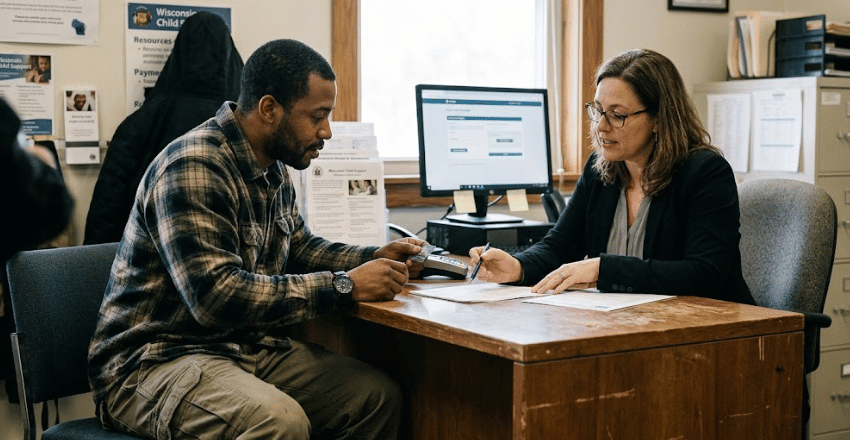
Wisconsin support orders commonly use income withholding, even when the paying parent isn’t behind on payments. In many cases, support is collected directly from the parent’s income.
Payments are processed through Wisconsin’s child support payment system. Parents can also use state services to review payment information and account activity.
Past-due amounts can trigger enforcement measures. Depending on the circumstances, these measures can include:
- increased income withholding;
- payment plans;
- tax refund interception;
- property liens; and
- other state or federal collection actions.
Past-due support may also accrue interest. This means delaying payment can increase the total amount owed over time.
When Does the Payment Obligation End?

Wisconsin’s general rule continues the support obligation until a child turns 18. In certain circumstances, support can continue until age 19 if the child remains enrolled in a qualifying secondary education program.
Reaching the end date doesn’t erase unpaid balances. If arrears remain, the case can stay open for collection and enforcement.
Your Next Step
Start by reviewing your current court order and gathering recent income records. You should also confirm the current placement schedule before estimating how a change in circumstances could affect support.
If income, placement, or other family circumstances have changed, consider contacting the appropriate Wisconsin child support agency or a Wisconsin family-law attorney about the modification process. This article provides general information and isn’t legal advice for a specific case.
For more legal explainers, visit Webdorbit’s legal archive.
Frequently Asked Questions
The court generally starts with gross income, the number of children, and physical placement. Basic rates range from 17% for one child to 34% for five or more children. Shared placement and other special rules can produce a different amount.
Not automatically. The shared-placement calculation considers both parents’ incomes and the amount of placement time each parent has. The final court order depends on the facts of the case and the applicable formula.
Parents who agree on a change can ask the court to approve a written stipulation. Following the formal process helps ensure that the new amount becomes part of an enforceable court order.
Review the existing order and consider requesting a formal modification. Depending on the circumstances, you may be able to request an agency review or ask the court directly to modify the order.
No. Past-due amounts can remain collectible after the current support obligation ends. Enforcement can continue until the arrears are resolved.