

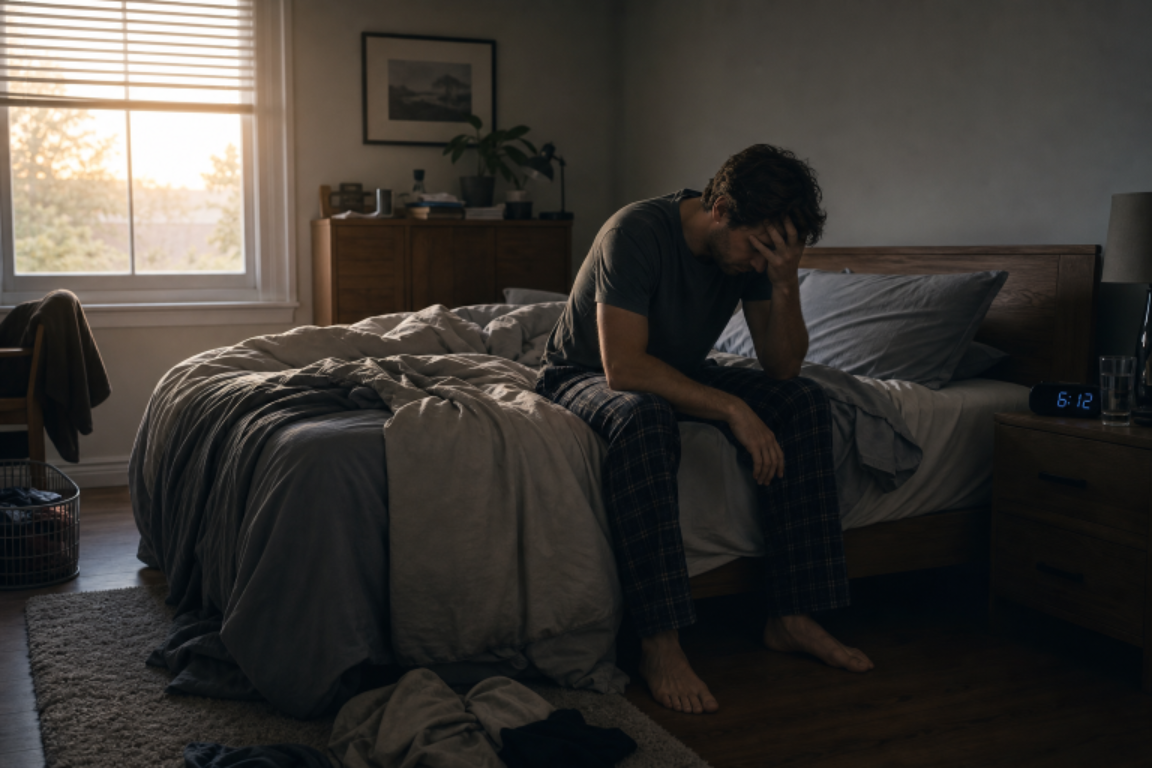
Poor sleep becomes more than a bad night when it happens most nights for several weeks, leaves you sleepy or foggy during the day, or comes with warning signs such as loud snoring with gasping, breathing pauses, unusual behavior during sleep or restless legs at bedtime. In those cases a sleep evaluation can find the cause, whether that is sleep apnea, insomnia, a movement disorder, a body clock problem or a medical issue, instead of leaving you to guess.
Everyone has rough nights after travel, stress, illness or a late meal. This guide explains how to tell ordinary disruption from a pattern worth checking, what a sleep evaluation involves, and how to get the most out of the appointment.
Ordinary Bad Nights vs. a Pattern Worth Checking
A useful question is not only “How many hours did I sleep?” but “How alert and functional am I during the day?” Most adults need at least seven hours of sleep, yet some people spend that long in bed and still wake unrefreshed because their sleep is broken up by breathing problems, pain or movement. The table below shows the difference between short-term disruption and the kind of pattern that deserves a medical conversation.
| Usually short-term | Worth getting evaluated |
|---|---|
| Poor sleep for a few nights around a clear trigger (deadline, travel, illness) | Poor sleep most nights for several weeks with no obvious end |
| Feeling tired but still able to work, study and drive safely | Nodding off in meetings, at red lights or while reading |
| Occasional light snoring, especially with a cold | Loud, regular snoring with choking, gasping or witnessed pauses |
| Sleep improves once the stressor passes | Sleep stays poor even after habits and schedule improve |
| Feeling better after one or two good nights | Waking unrefreshed even after long nights in bed |
Eight Signs It May Be Time to Seek Help
1. Daytime sleepiness keeps getting in the way
Frequent yawning, nodding off during quiet activities, trouble focusing and leaning on caffeine to get through the afternoon are not just signs of low motivation. Sleepiness that continues after adequate time in bed can signal fragmented or poor-quality sleep. Falling asleep while driving, operating equipment or working in a safety-sensitive job should be treated as an immediate safety concern.
2. Snoring comes with gasping or pauses
Loud, uneven snoring, choking sounds, gasping or witnessed pauses in breathing can point to sleep-disordered breathing such as obstructive sleep apnea. Not everyone with sleep apnea snores, though. Morning headaches, dry mouth, frequent nighttime bathroom trips, fatigue and irritability can also matter. This overview of common sleep disorder warning signs gives more context on symptoms that should not be dismissed.
3. Falling or staying asleep is a regular struggle
Repeated difficulty falling asleep, waking often or waking much earlier than intended can wear down concentration, patience and energy. A temporary disruption often settles once the stressor passes. A recurring pattern, especially one that affects how you function the next day, deserves a conversation with a clinician. Insomnia can occur on its own or alongside pain, anxiety, depression, medication effects or another sleep disorder.
4. Unusual events happen during sleep
Sleepwalking, acting out dreams, night terrors, repeated kicking, nighttime eating or other unusual behaviors may need evaluation when they cause injury, change suddenly or disturb a bed partner. The person having them often does not remember, so a partner’s or family member’s observations are especially helpful. Heavy teeth grinding is another clue worth mentioning to both your doctor and your dentist, since long-term wear can lead to damaged or lost teeth and, eventually, restorative work like the options covered in our look at the future of dental implants.
5. Restless legs or nighttime discomfort delays sleep
An uncomfortable urge to move the legs, crawling sensations, aching or symptoms that get worse while resting can make bedtime frustrating. Moving brings short-term relief, but repeated discomfort shortens and fragments sleep. Low iron levels, pregnancy, kidney disease and certain medications are among the factors a clinician may look at.
6. Your sleep schedule never lines up with your life
Some people simply cannot fall asleep until very late and struggle to wake for work or school, while others become sleepy far earlier than they want. Shift workers may sleep poorly no matter what they try. When your body clock is consistently out of step with your required schedule, a circadian rhythm problem may be involved, and there are targeted approaches that can help.
7. Mood, memory and focus are slipping
Poor sleep can contribute to irritability, low patience, anxiety, low mood, forgetfulness and slower thinking. It does not explain every mood or memory concern, but it can make existing symptoms worse. Someone may spend eight hours in bed yet wake repeatedly from breathing problems or discomfort, then feel drained and unfocused all day. Research links chronic sleep disruption with poorer daytime performance and with heart and metabolic health concerns, although an association does not prove that sleep alone causes a particular disease.
8. Sleep changed after an injury or illness
Headaches, fatigue, concentration changes and disrupted routines after a head injury can all affect rest, and concussion recovery and sleep are often closely connected. New sleep problems after surgery, a new diagnosis, a medication change or a period of chronic pain are also worth raising, because treating the underlying issue may improve sleep as well.
Common Causes a Sleep Evaluation Looks For
- Obstructive sleep apnea: repeated narrowing or collapse of the airway during sleep.
- Chronic insomnia: ongoing trouble falling or staying asleep with daytime effects.
- Restless legs syndrome and periodic limb movements: movement-related sleep disruption.
- Circadian rhythm disorders: a body clock that runs too early, too late or is disrupted by shift work.
- Parasomnias: sleepwalking, dream enactment and other unusual behaviors.
- Narcolepsy and other hypersomnias: severe daytime sleepiness despite enough sleep.
- Contributing factors: pain, reflux, mood conditions, medications, alcohol or caffeine.
What Happens During a Sleep Evaluation?
A sleep evaluation usually starts with a detailed conversation rather than an overnight test. A clinician, often your primary care doctor first and then a sleep specialist if needed, reviews your sleep habits, work schedule, medications, alcohol and caffeine use, pain, mood, family history and symptoms such as snoring, nightmares, leg movements or daytime sleepiness.
- Sleep history and questionnaires: standard questions help gauge daytime sleepiness and insomnia severity.
- Sleep diary: tracking bedtime, wake time, awakenings, naps and alertness for one to two weeks often reveals patterns.
- Physical exam: the clinician may check the airway, neck, weight, blood pressure and other factors that affect breathing or sleep quality.
- Lab work when relevant: for example, iron levels when restless legs are suspected.
- Testing when needed: a home sleep apnea test, an overnight in-lab sleep study or another specialized test.
- Results and a treatment plan: this may involve breathing therapy, behavioral treatment for insomnia, medication changes or treatment of an underlying condition.
Home Testing vs. In-Lab Sleep Studies
| Home sleep apnea test | In-lab sleep study | |
|---|---|---|
| Where | Your own bed | A sleep center, overnight |
| Main use | Suspected obstructive sleep apnea in otherwise healthy adults | Broader or complex sleep problems |
| What it records | Breathing, airflow, oxygen levels, heart rate | Breathing, oxygen, heart rhythm, brain activity, sleep stages, leg and body movement |
| Limits | Cannot assess most other sleep disorders | Less familiar setting, scheduling can take longer |
The right choice depends on age, symptoms, health history and the question being answered. Consumer sleep trackers and smartwatches can show trends, but they cannot diagnose sleep disorders, so treat their data as a conversation starter.
How to Prepare for Your Appointment
- Write down when the problem began, how often it happens and what makes it better or worse.
- Keep a sleep diary for at least a week before the visit.
- Bring a list of medicines, supplements, caffeine and alcohol use.
- Ask a bed partner about snoring, gasping, pauses, kicking or unusual behavior; a short phone recording can help.
- Note daytime symptoms, including headaches, poor focus, mood changes and accidental dozing.
- Bring tracker data as supporting information, not as a diagnosis.
When Poor Sleep Is a Safety Issue
Do not wait for a routine appointment if sleepiness is causing near misses while driving, repeated injuries during sleep, severe confusion or other urgent problems. Avoid driving when you feel dangerously sleepy. Repeated breathing pauses or alarming nighttime symptoms should be raised promptly with a medical professional, and any emergency symptoms such as chest pain or severe shortness of breath need emergency care.
Helpful Habits While You Wait for Care
These habits will not fix every sleep disorder, but they support better rest and make test results easier to interpret:
- Keep the same wake time most days, including weekends.
- Get outdoor light early in the day when you can.
- Limit caffeine after early afternoon, and cut back on nicotine, alcohol and heavy late meals.
- Keep the bedroom quiet, dark, cool and comfortable.
- Use a calming pre-bed routine instead of working or scrolling in bed.
- If you cannot sleep after a while, get up and do something quiet in dim light until you feel sleepy.
Avoid starting sleep medicines or supplements on your own without medical advice, as some can mask symptoms or interact with other medications.
Bottom Line on Poor Sleep
Occasional poor sleep is normal. Weeks of broken sleep, daytime sleepiness, loud snoring with pauses, unusual nighttime behavior or restless sensations are not, and they are worth checking. Keep a simple sleep diary, gather notes from anyone who sees you sleep, and book an appointment with your doctor; finding the cause early gives you the best chance of better rest, steadier energy and protecting your long-term health. This article is general information, so speak to a qualified healthcare professional about your own symptoms.
For more practical health guides, such as Dos And Don’ts Before and After Laser Hair Removal, browse our Health category.
Frequently Asked Questions
How long should poor sleep continue before seeking help?
There is no single deadline. Frequency, severity, daytime effects and safety risks matter more than a fixed number of nights, but trouble most nights for several weeks, or any dangerous sleepiness, is a good reason to see a doctor.
Can someone have sleep apnea without loud snoring?
Yes. Daytime sleepiness, morning headaches, frequent waking and witnessed breathing pauses can also be meaningful signs, even when snoring is quiet or absent.
Is a sleep tracker enough to find the problem?
No. A tracker can help you notice patterns, but it cannot diagnose sleep disorders. A clinical evaluation and proper testing may still be needed.
Who should I see first for a sleep problem?
Most people start with their primary care doctor, who can review symptoms, check for contributing conditions and refer to a sleep specialist or order a sleep study if needed.
Is a home sleep test as accurate as an in-lab study?
A home test can be suitable for adults with likely obstructive sleep apnea, but it records fewer signals. An in-lab study is preferred for more complex symptoms or when a home test is inconclusive.